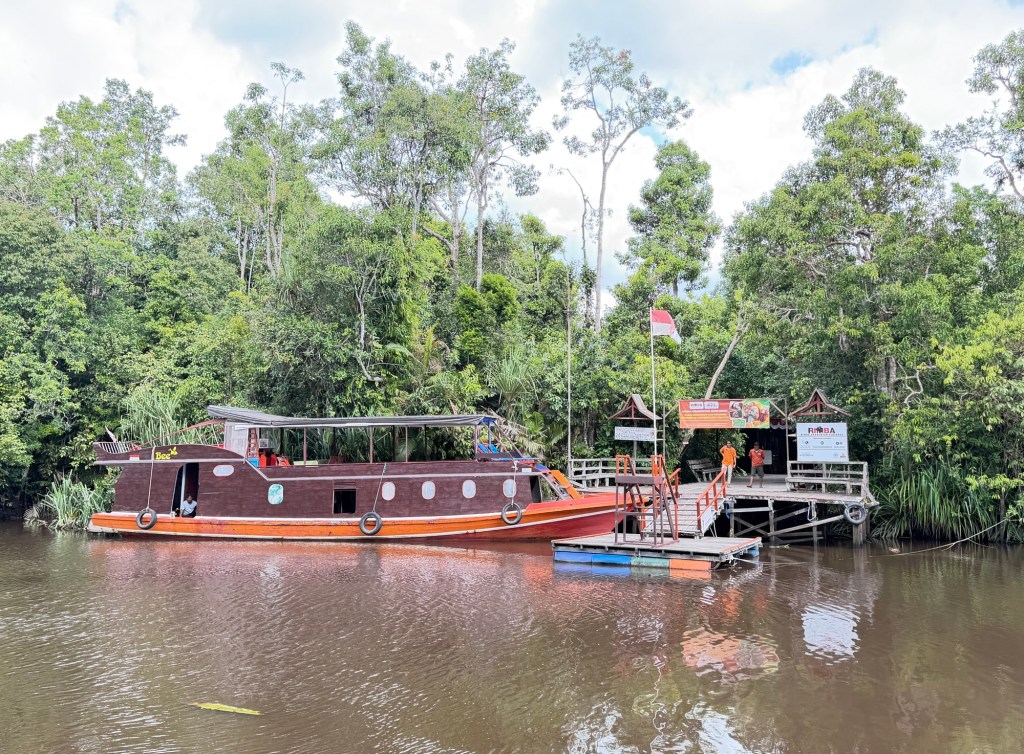
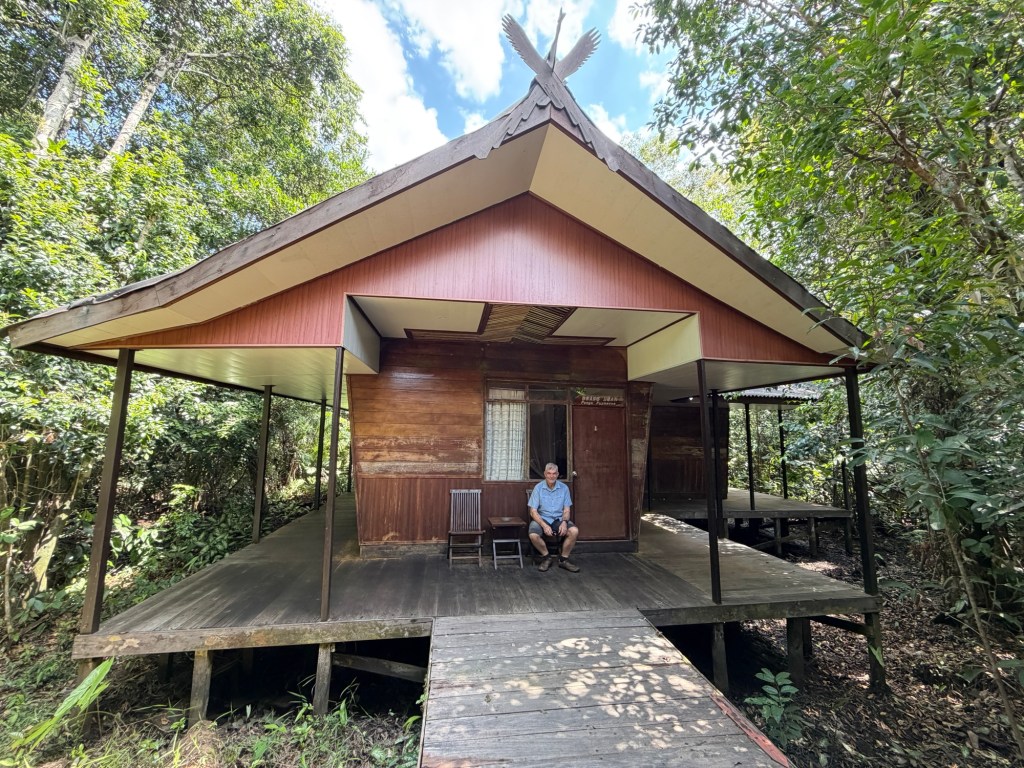
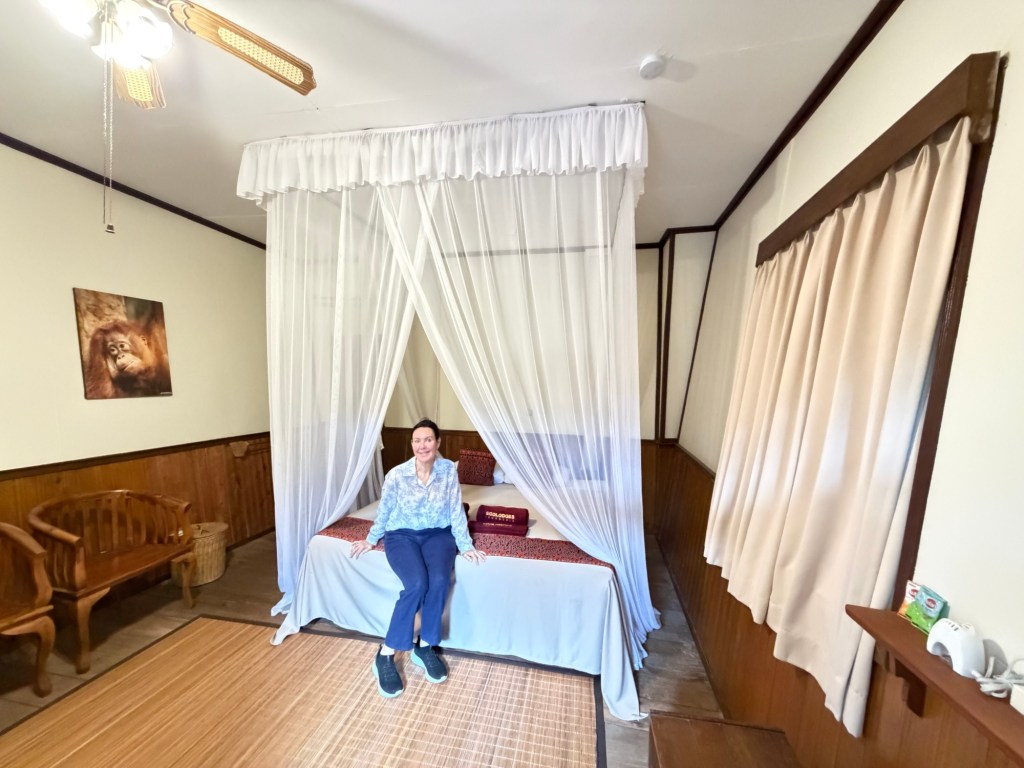
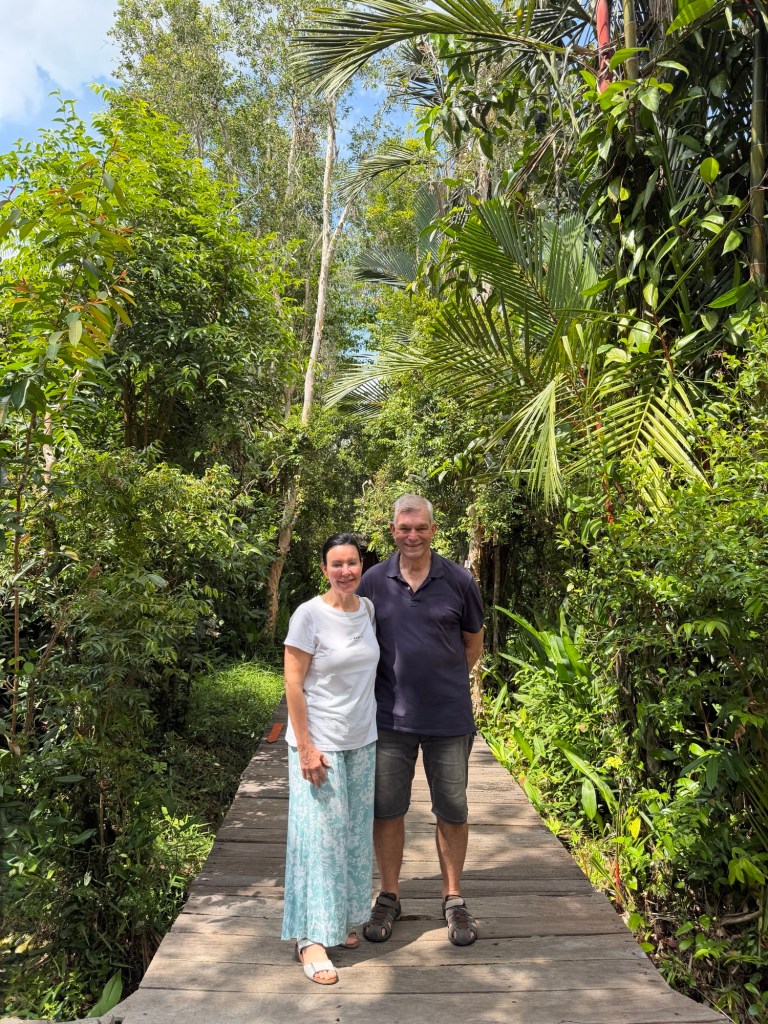
Sri Lanka, Southern India and the Maldives 2026 (4)

India continued

Day 20

Sunday 25th January

Thanjavur – Chettinad

21-27 degrees, slight drizzle 

I have to say our vegetarian breakfast, which included eggs, was quite nice today, and delivered with the minimum of fuss. We even had wifi for an hour, so things were looking up – just as we’re about to leave! 

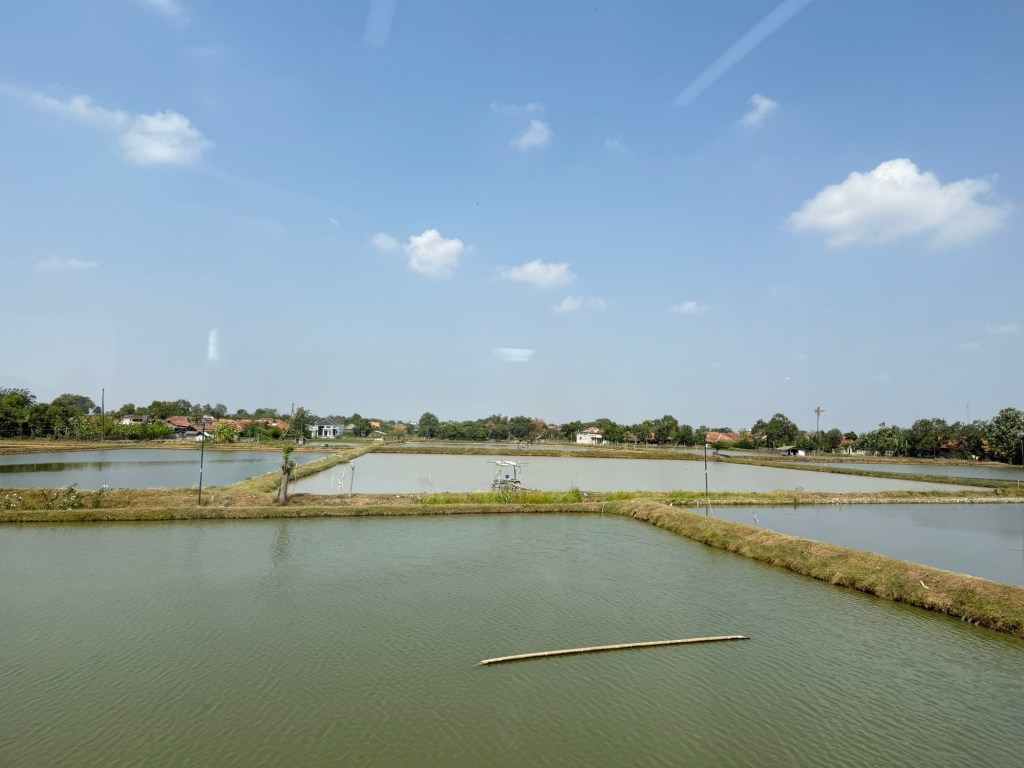
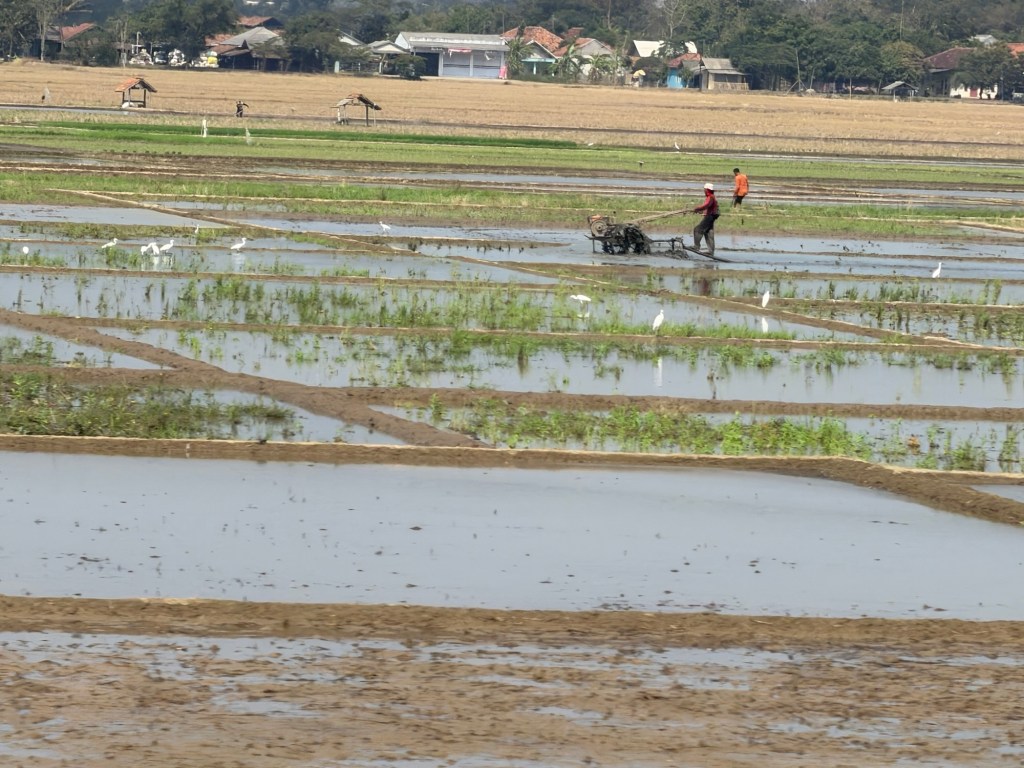
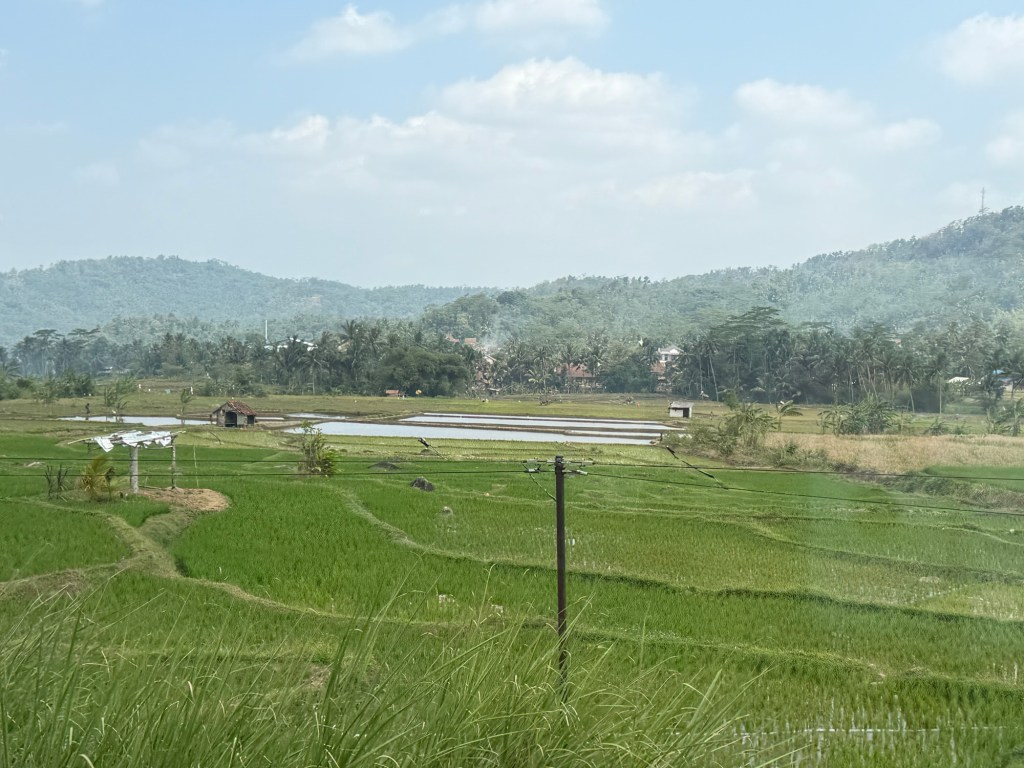
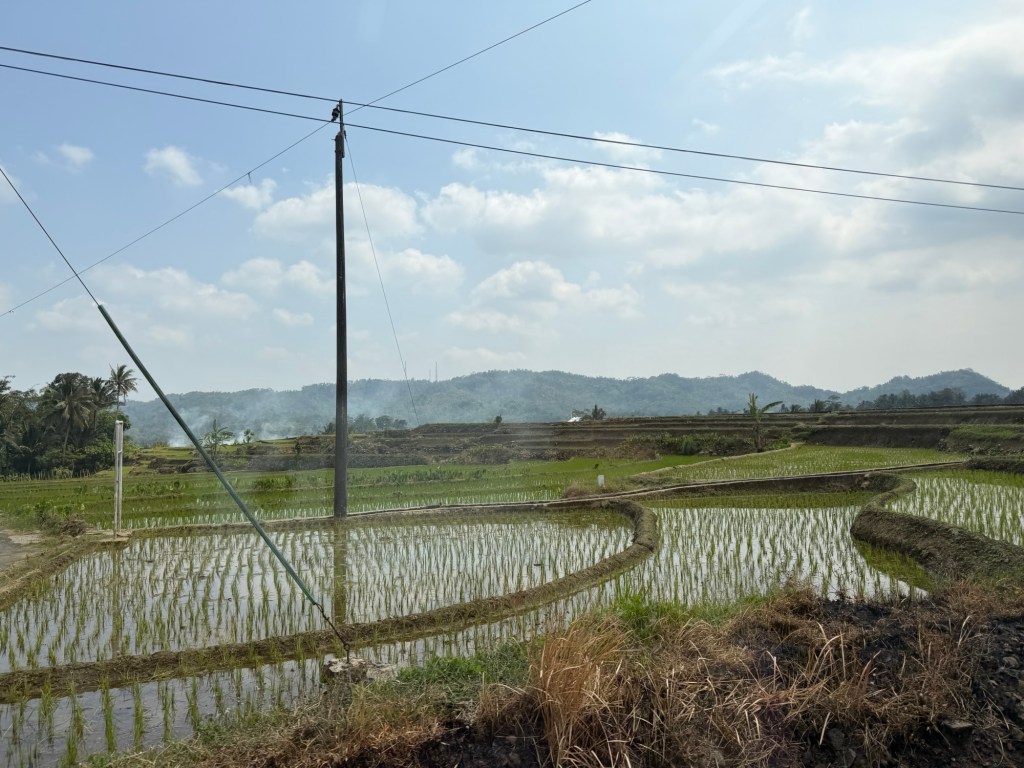
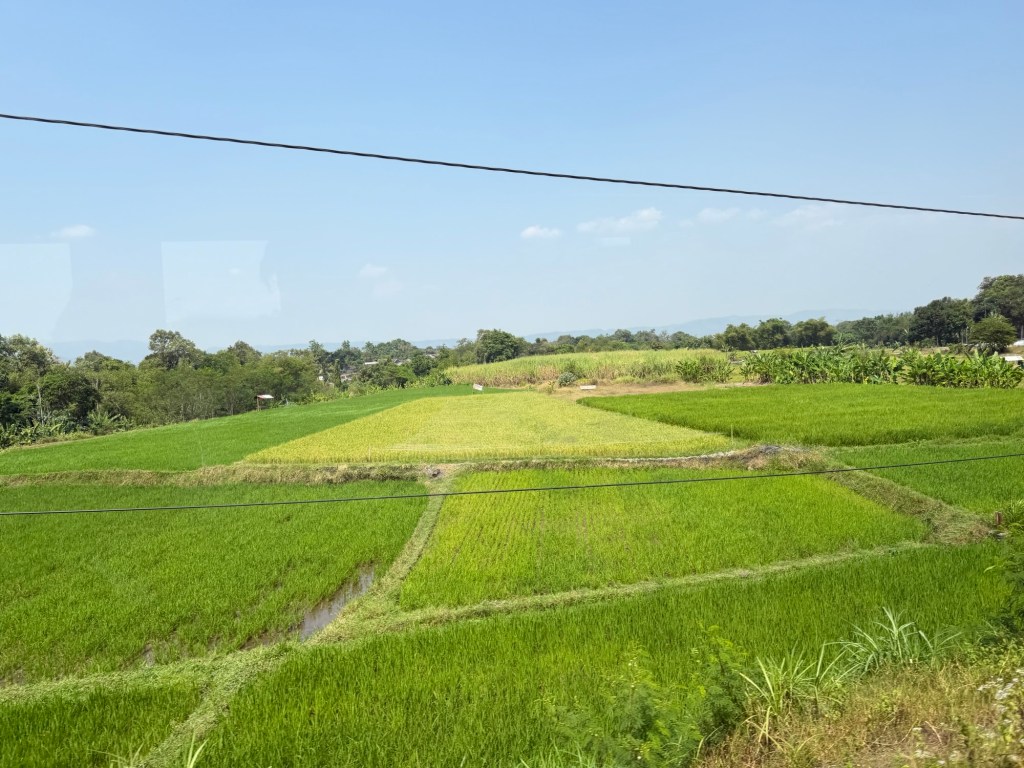
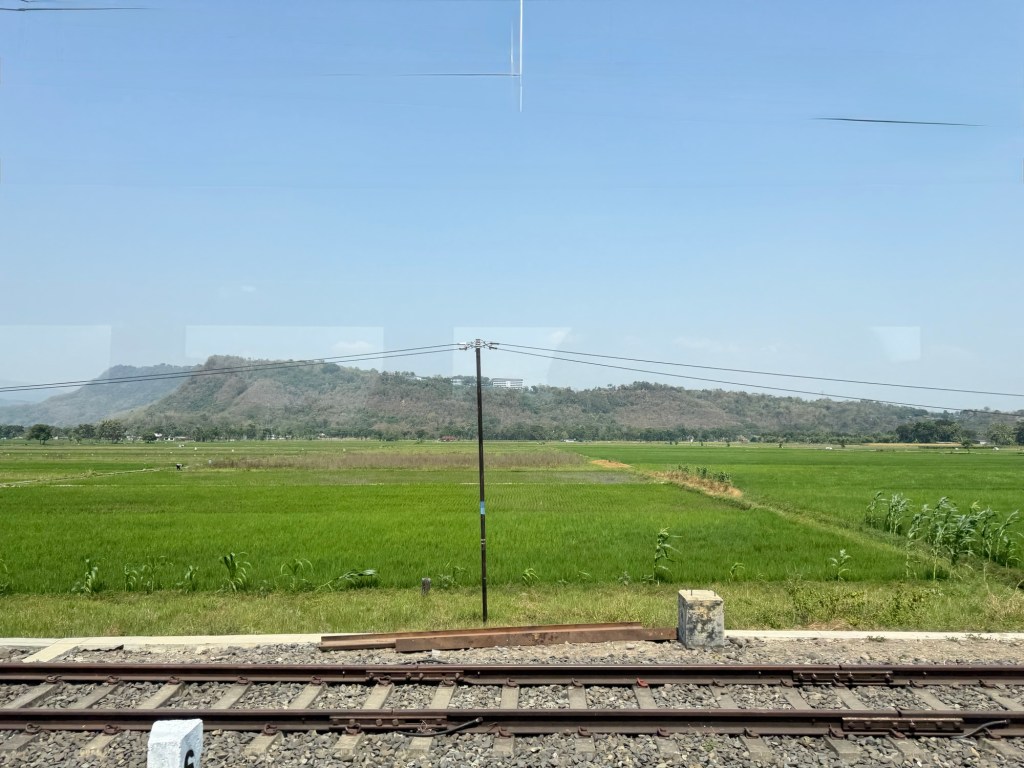
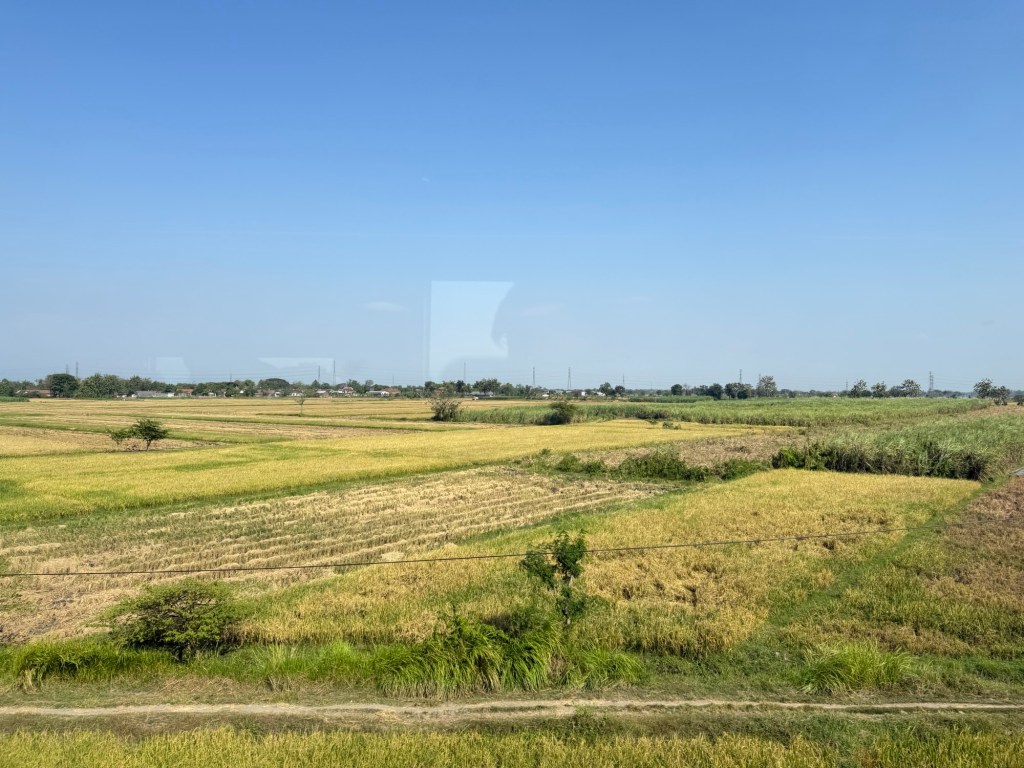
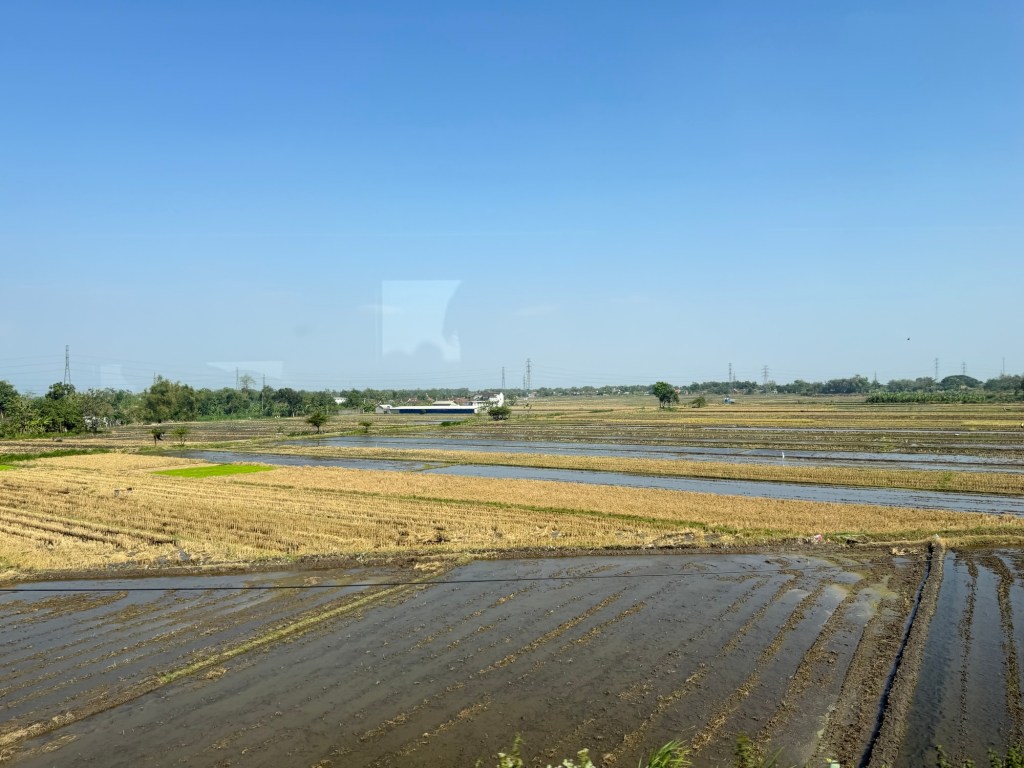
Pradeep picked us up at 9am, ready for our next adventure. It was a two hour drive to Chettinad, again through farmlands, and a decent road. We had a really interesting stop  to watch some rice harvesting. The farmers loved that we stopped, and took as many photos of us, as we took of them. The rice harvesting was very hard work for everyone, except for the tractor driver – though when there was a blockage he had to get out of the cabin and fix it. For the women moving the chaff at the back of the tractor, it was dirty dusty work! 

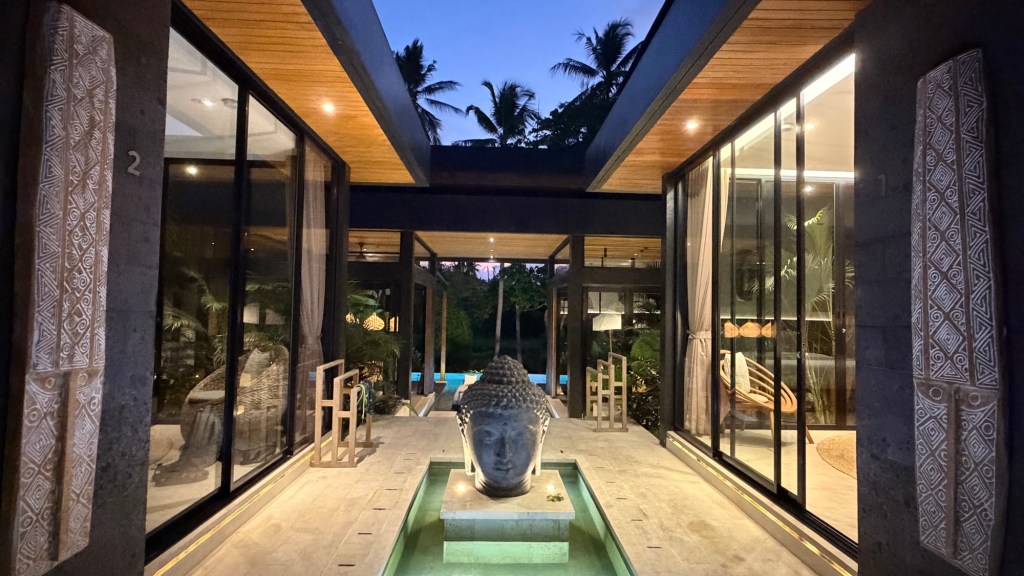
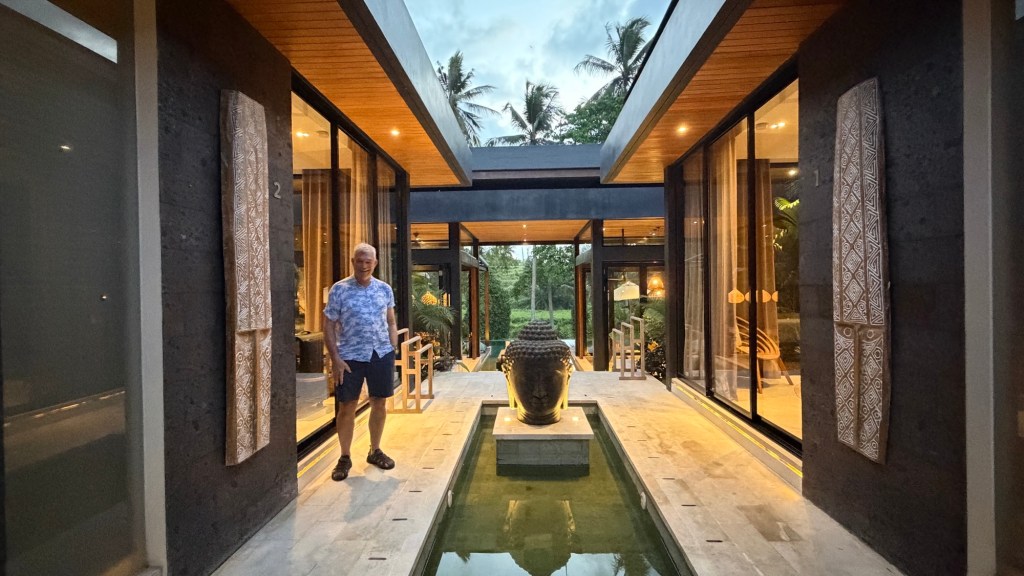
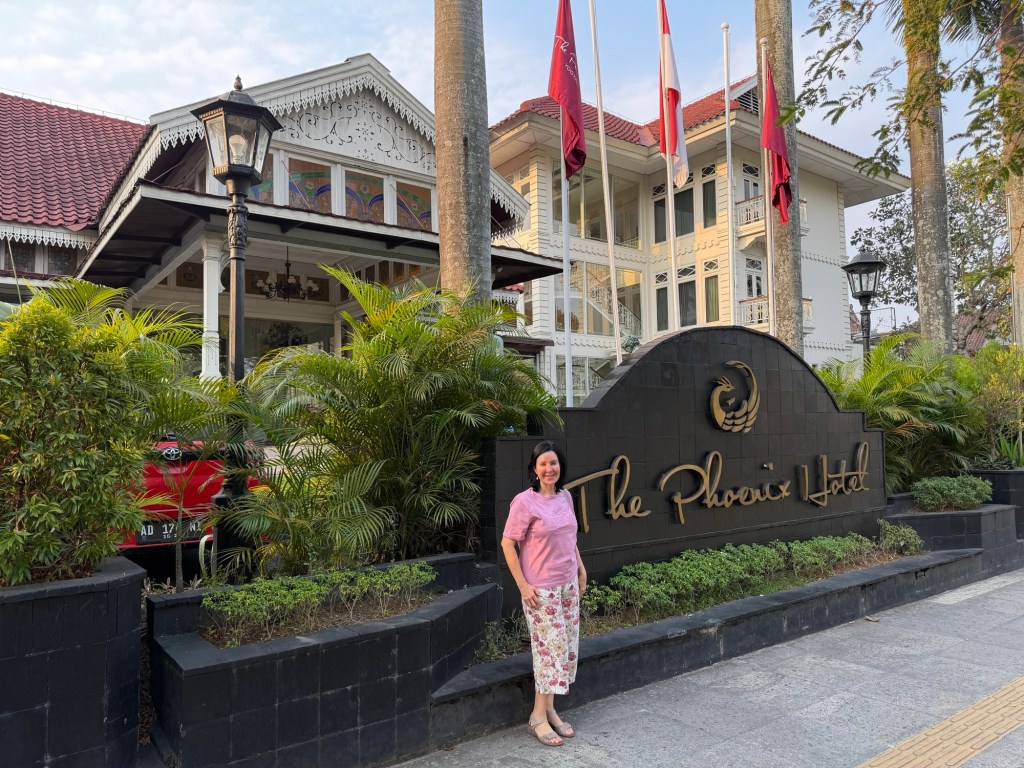
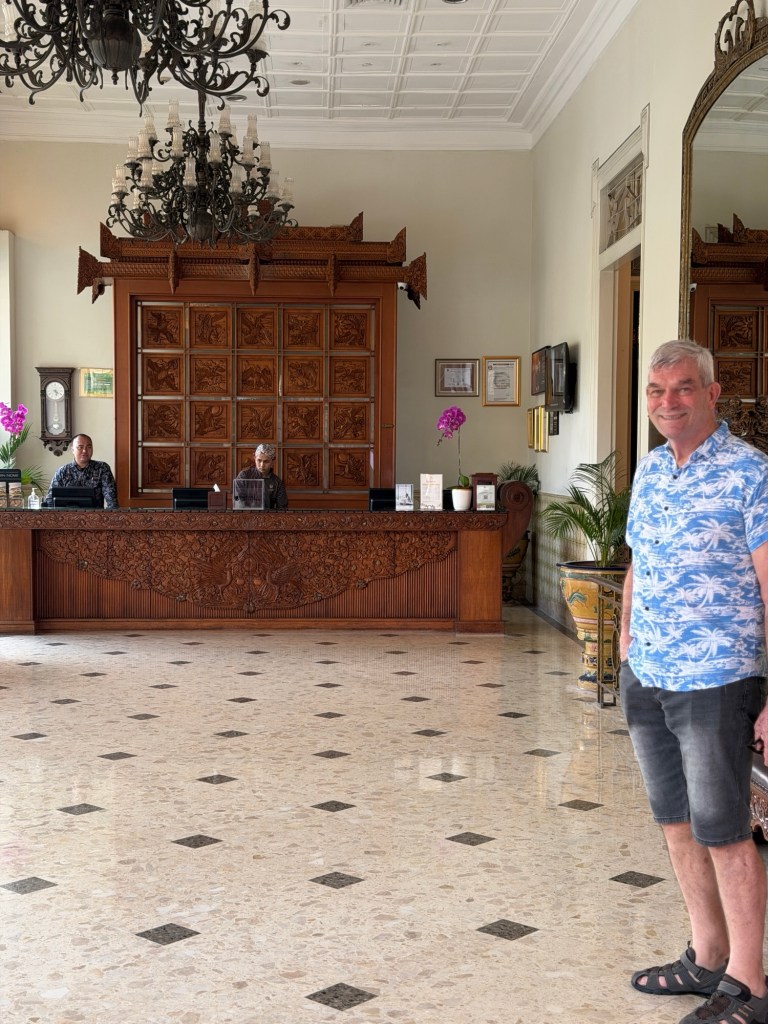
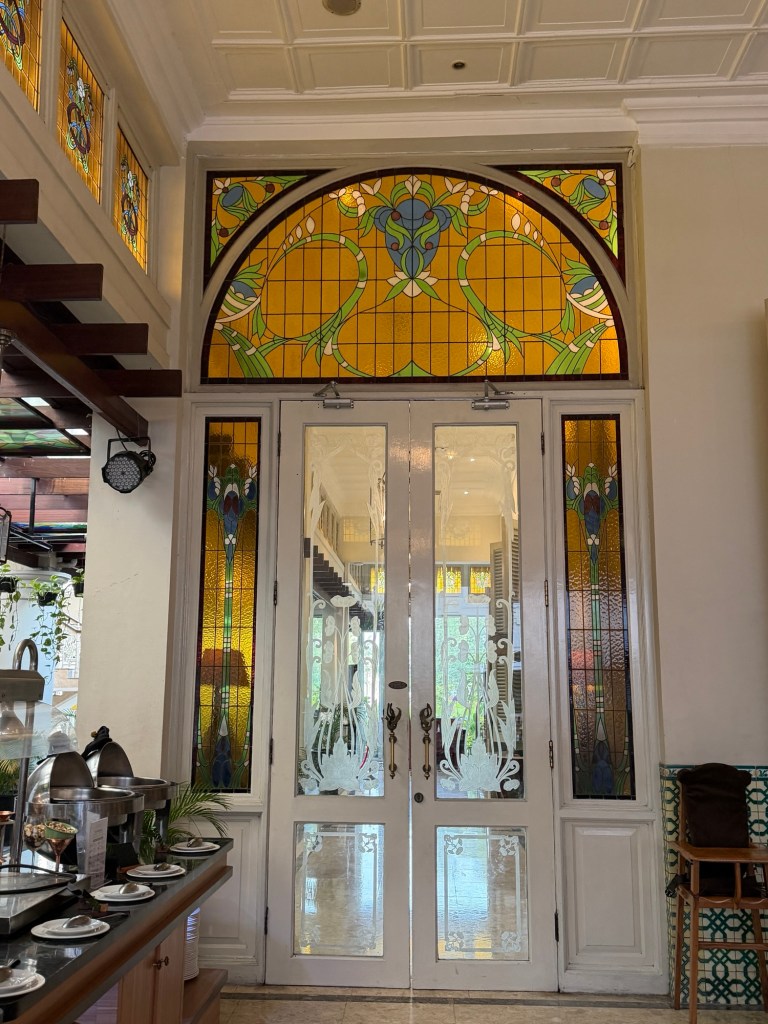
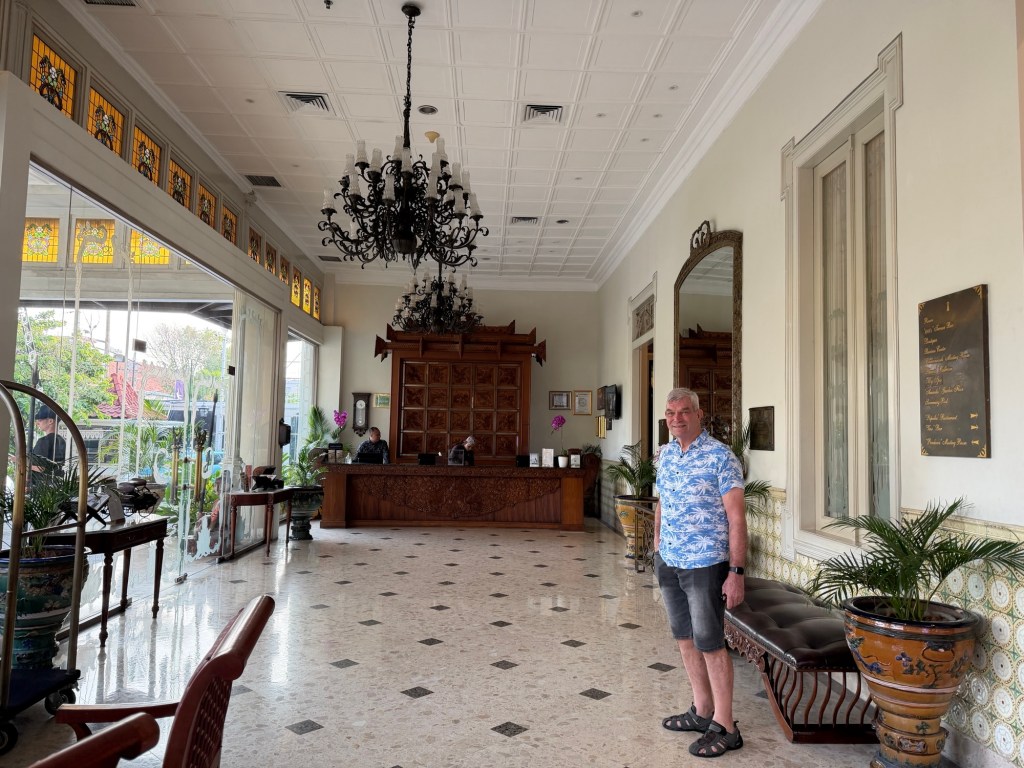
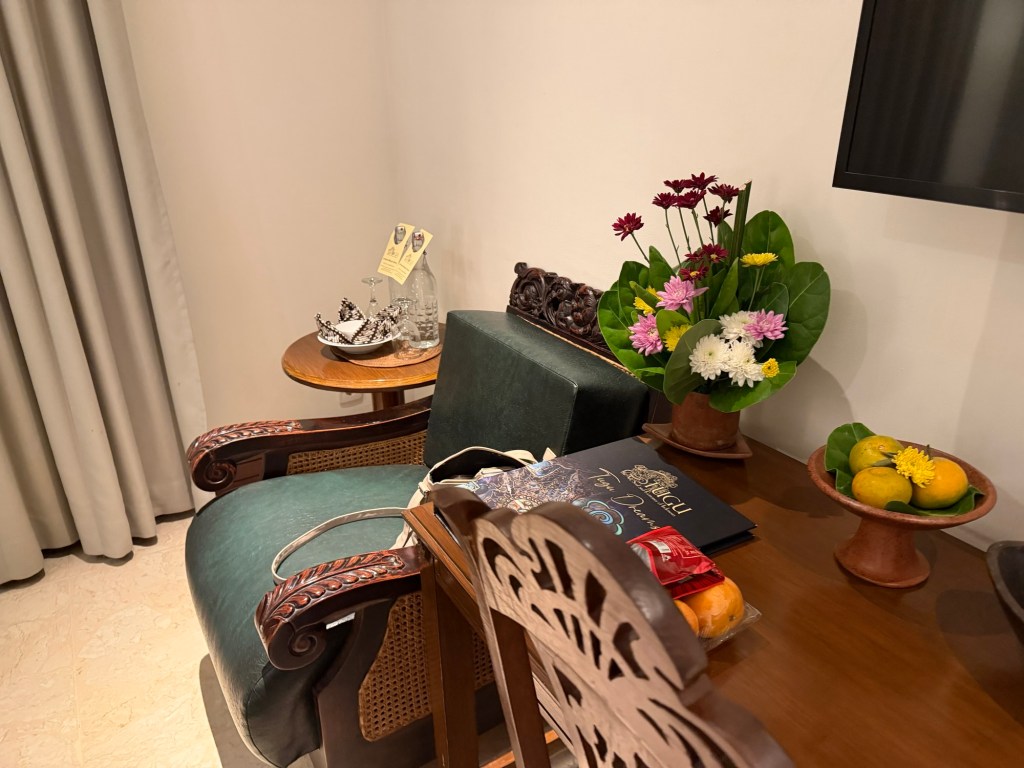
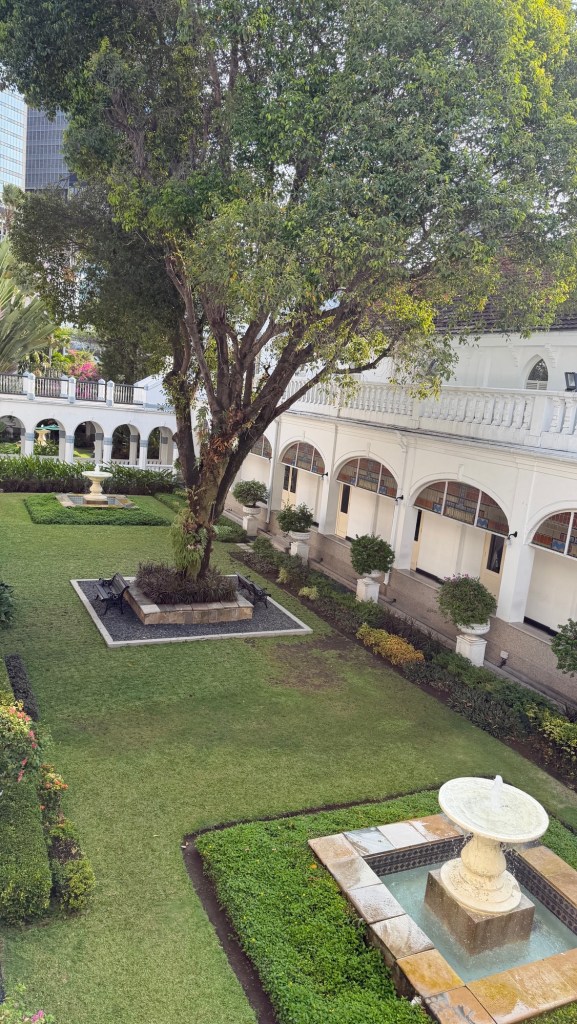
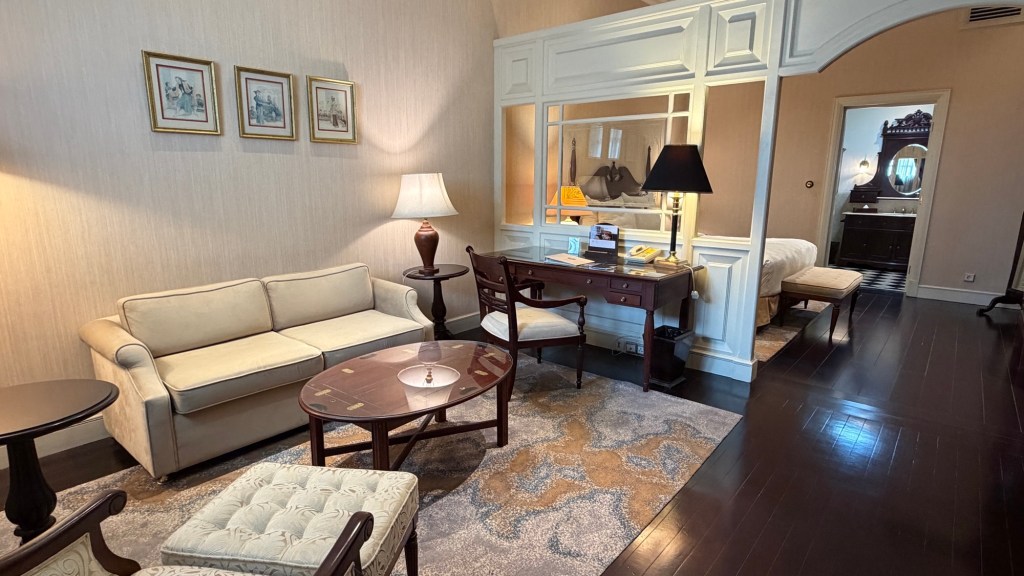
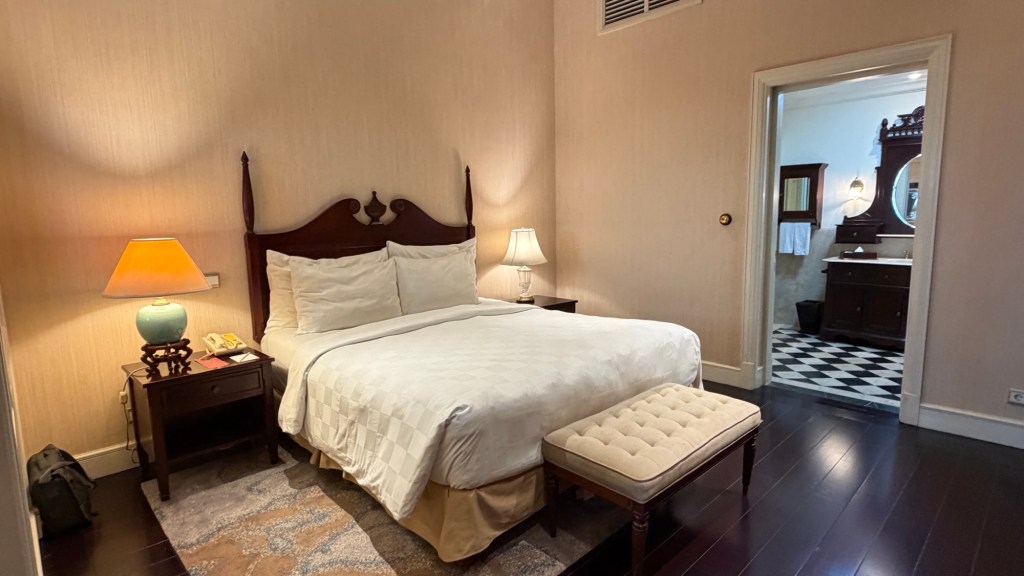
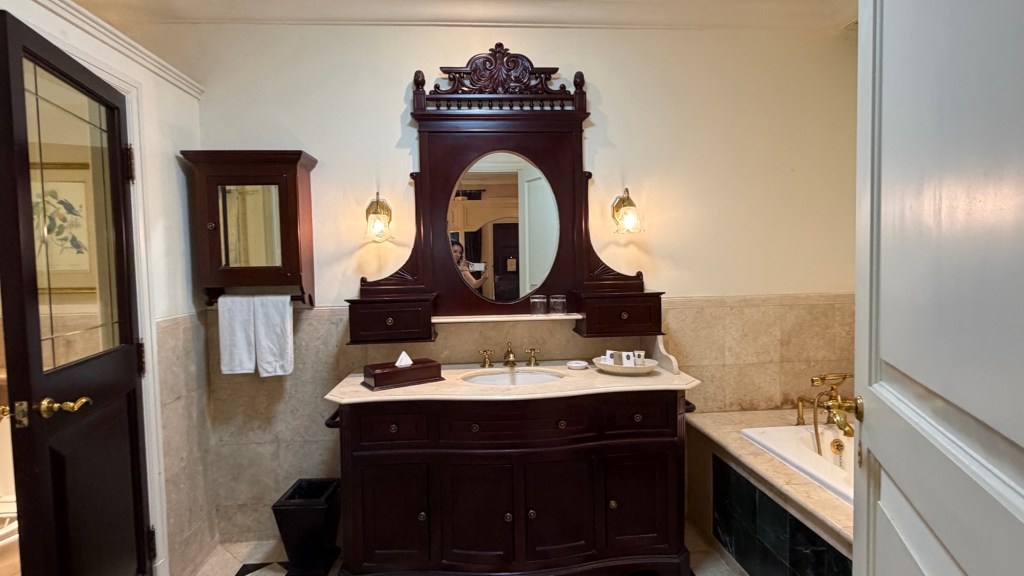
By midday we were checked into the 1902 Chettinadu Mansion – an authentic heritage mansion which has been converted into eight suites. Shoes had to be left at the front entrance – our soft feet are toughening up!

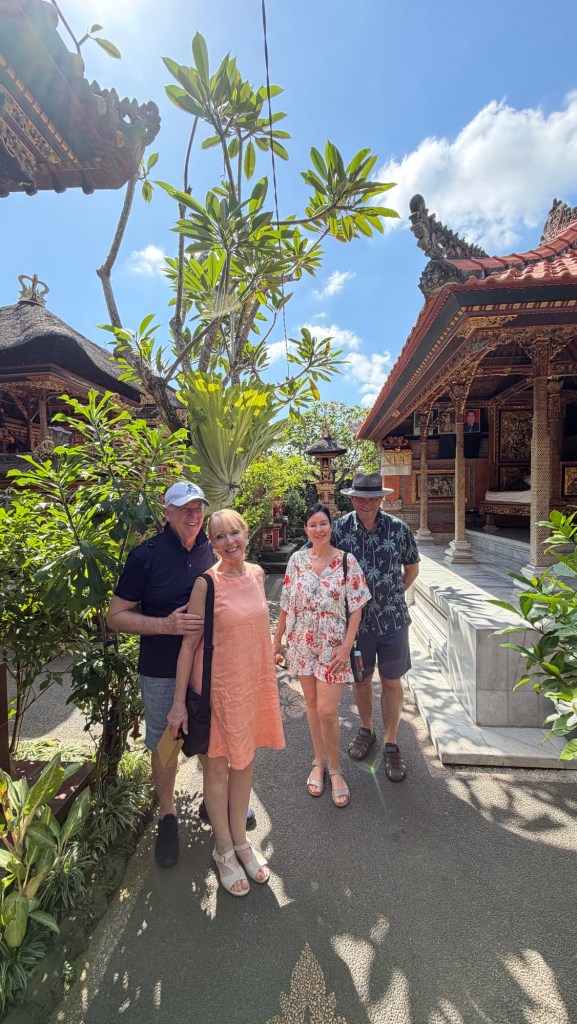
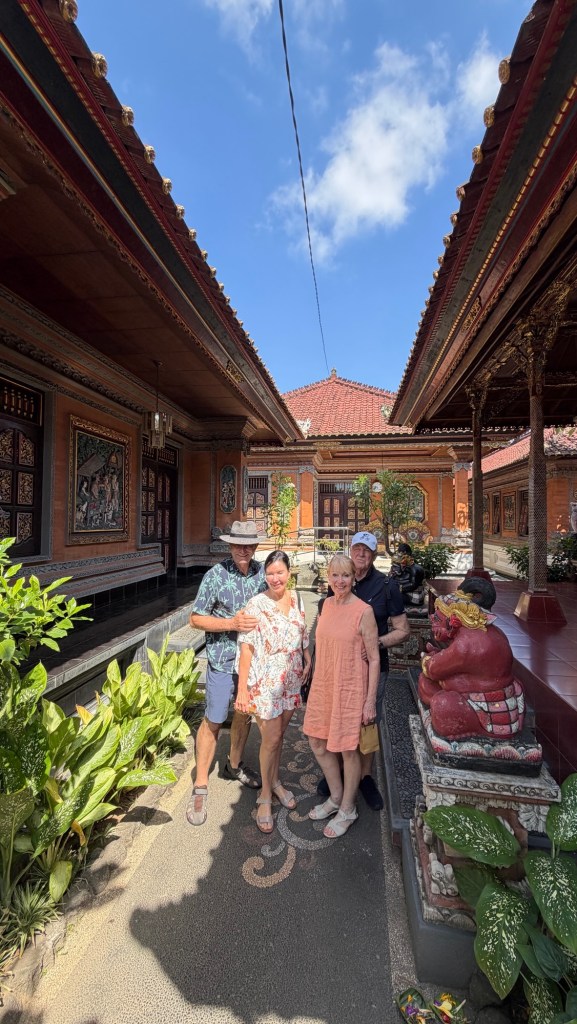
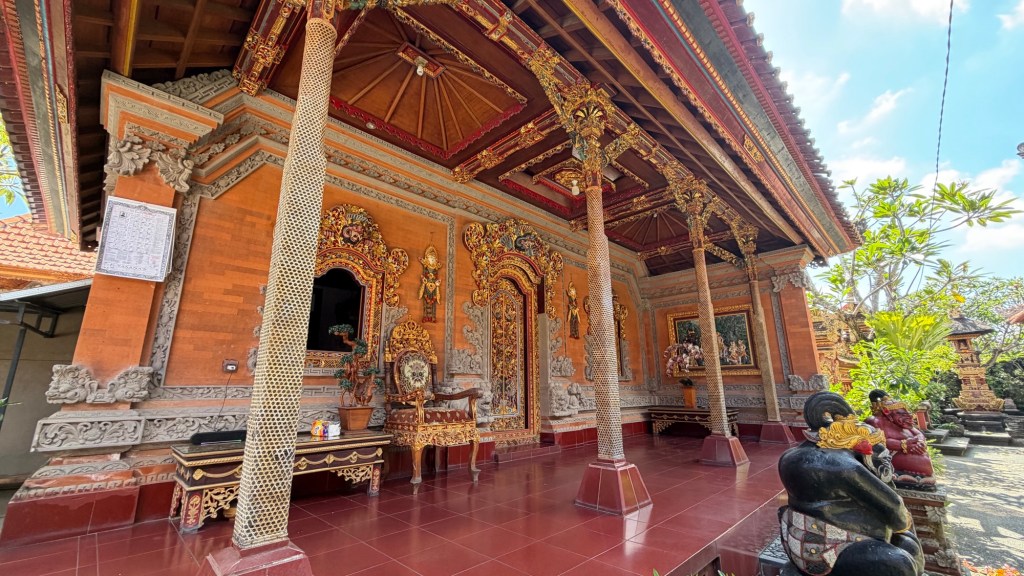
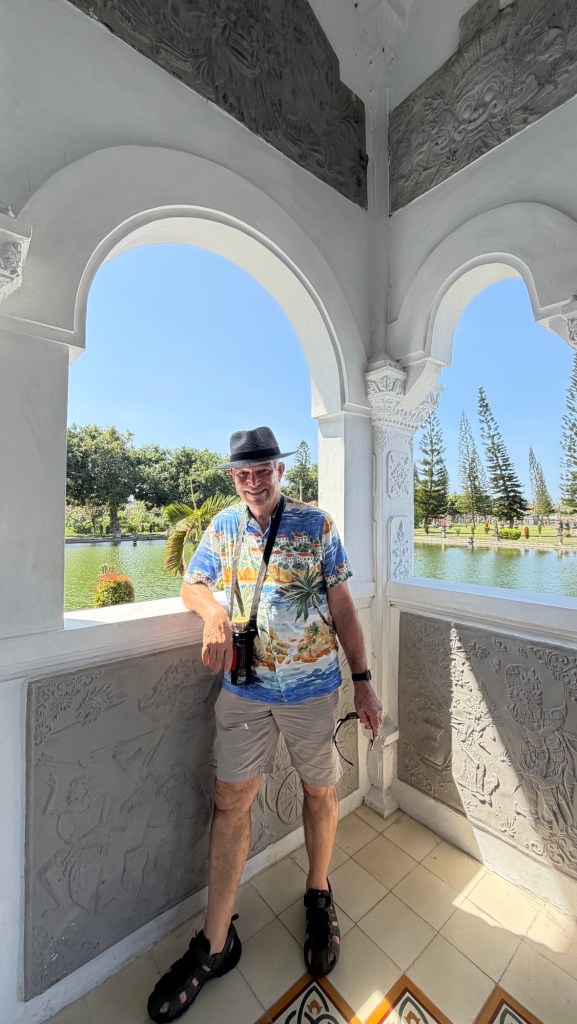
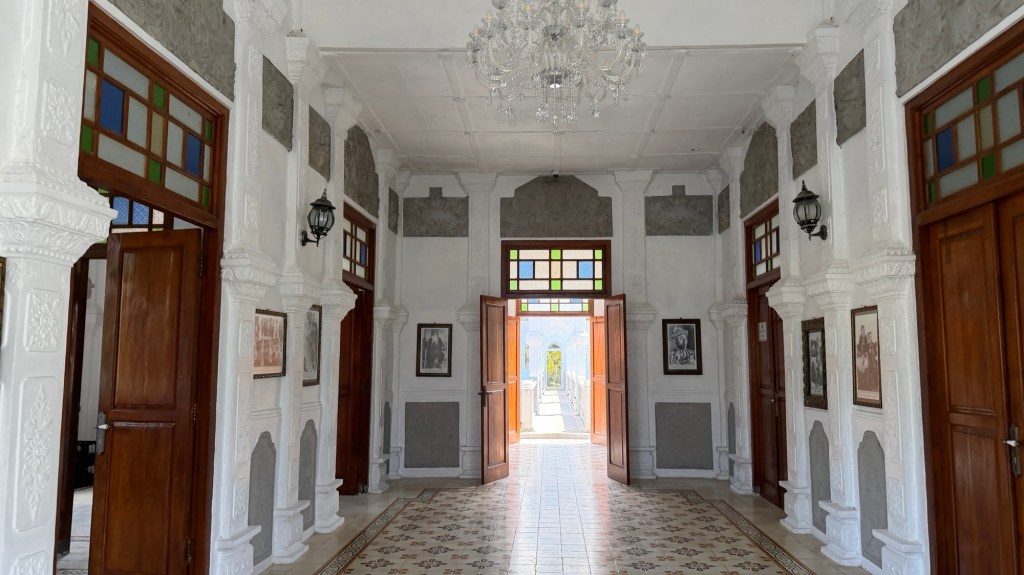
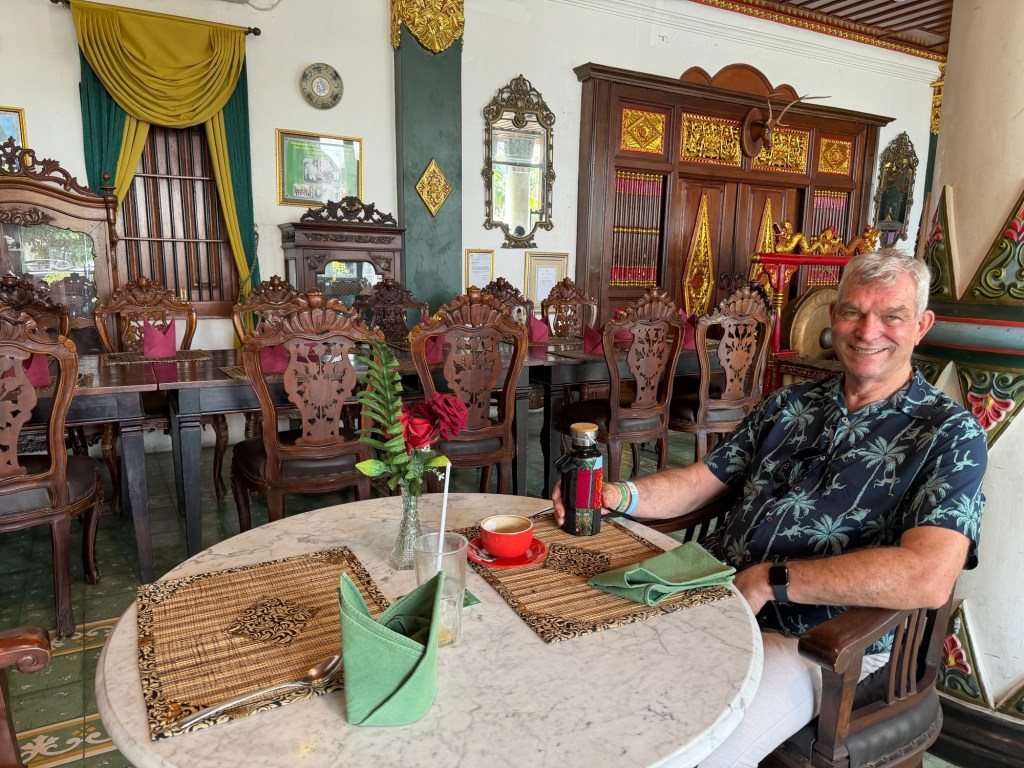
Chettinad is rich in cultural heritage, art and architecture, and is well known for its 18th century mansions, embellished with marble and Burma teak, wide courtyards, and spacious rooms. The Chettiar mansions, as they are known, were built by the Chettiars, a wealthy Hindu banking and trade clan, between 1850 and 1950 as their ancestral homes. While these buildings originally housed multiple generations, many of them now sit empty for most of the year, only used for large family gatherings. The mansions were meant to showcase the Chettiars’ wealth, much of which had been accummulated overseas. As a result, the mansions are decorated with chandeliers made of Murano glass from Venice, clocks from Switzerland and tiles from England. We walked around the village, visiting the RK Mansion. Raja’s Palace is supposed to be spectacular, but was closed to visitors. 

Pradeep took us to one of the many tile factories. The tiles are hand made using cement and are 2 cms thick. The process was fascinating to watch. 

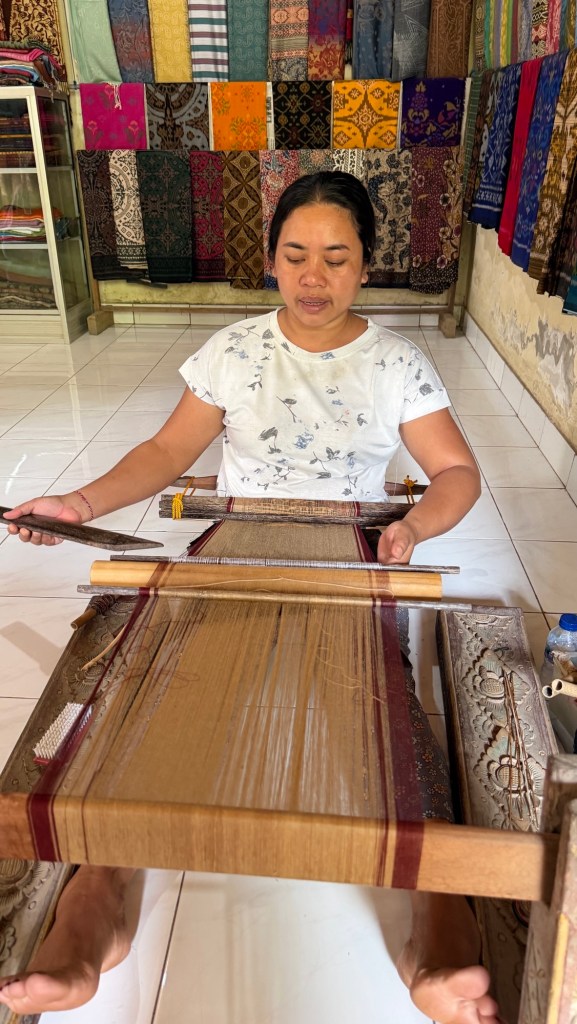
There are also several cotton weaving factories in the village. The fabric is woven manually on looms. The fabrics are cut into 6.5 metre lengths – for saris. I did buy two pieces, more fabric than I needed , but for $2 metre for cotton, and $3 metre for cotton/silk, I’m happy to give it a go when I get home. The cotton is much stiffer than we are used to, but I was assured it would soften when I wash it. 

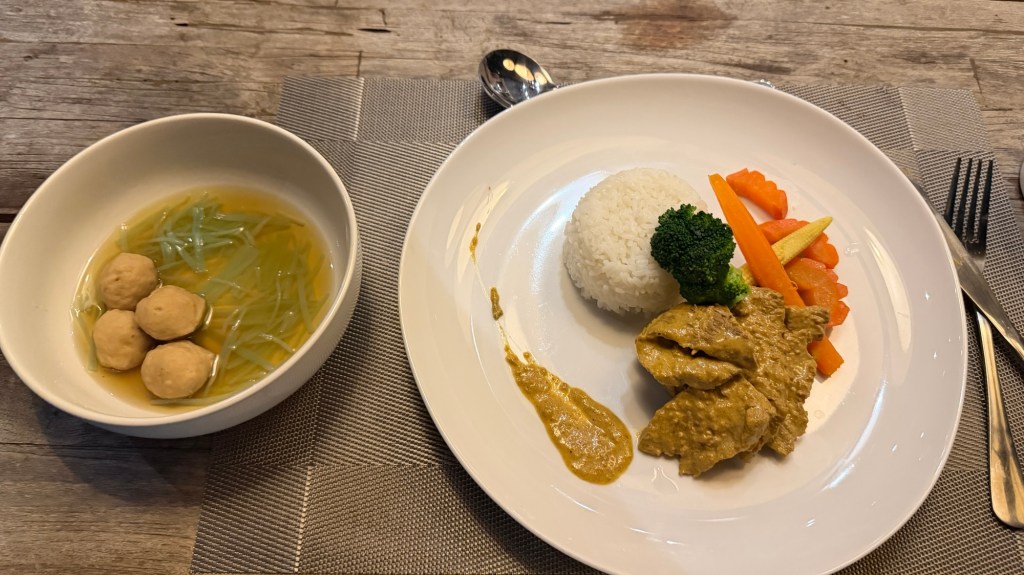
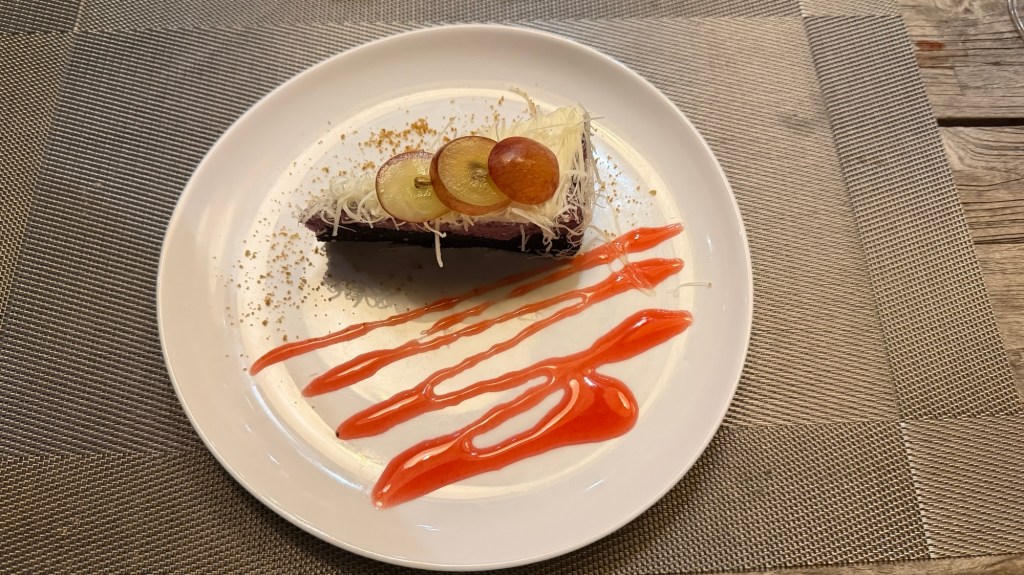
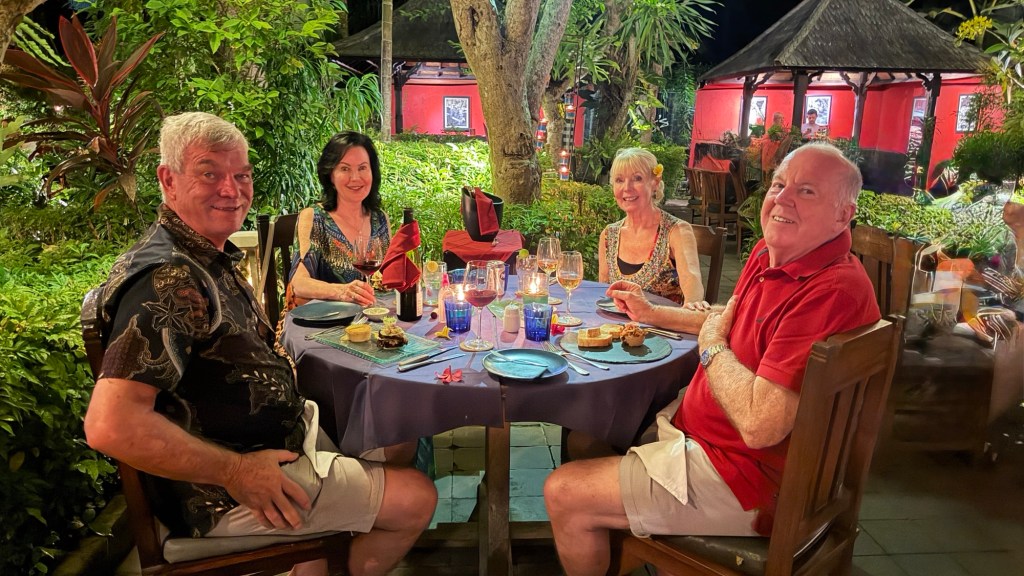
In the evening we enjoyed a candlelight Chettinad cuisine dinner. Chettinad is a cuisine from the Chettinad region of Tamil Nadu and considered as one of the spiciest and aromatic cuisines of Indian owing to the extensive usage of freshly ground whole spices. Star anise and Kalpasi (Black stone flower/ kala patthar phool) are the spices included in many recipes which provide a distinct aroma to the Chettinad food. We had chicken curry, an egg curry, fried cauliflower and rice, followed by carrot and beetroot halva for dessert, served warm. All very nice. No alcohol available for the past two nights – lucky we had our secret stash we bought in Pondicherry! 

Day 21

Monday 26th January – Australia Day 

Chettinad – Madurai

21 -28 degrees 

It was our Australia Day today, but it was also India’s Republic Day as well. Many people heading to the temples to celebrate. One positive, the roads were not so busy… so we were told! 

It was a two hour drive to Madurai, the second largest city of Tamil Nadu. Known as the temple town of India, and situated on the banks of the River Vaigai, is believed to be more than 2500 years old. Culturally rich with ancient traditions, historical significance and natural beauty, Madurai is the city that represents the spirit of Tamil Nadu. Madurai was a centre of learning and pilgrimage for centuries. 

We checked into the GRT Regency Hotel and, feeling adventurous, headed out for a short wander around the neighbourhood. It didn’t take long to realise this was no gentle stroll — the streets were dusty, gritty and a snapshot of very basic living. We zig-zagged our way past cows and cow poo, chooks, dogs, tuk tuks, motorbikes, cars and the occasional bus thundering through it all. The air was thick with unfamiliar smells and the soundtrack was a constant chorus of horns and voices. Slightly overwhelmed but thoroughly enlightened, we beat a retreat back to the calm and cleanliness of the hotel.

We did spot a barber along the way and, as Frank was overdue for a haircut, he decided to give it a go. With a bit of creative hand-gesturing and smiles, we successfully navigated the language barrier. Ten minutes later — and just 150 rupees (about $2.40!) — Frank emerged with a very respectable new haircut. Hands down, the cheapest haircut he’s ever had.

But wait… it nearly turned into the most expensive. Frank managed to leave his hearing aids behind 😳. Thankfully, he’d mentioned where we were staying, and the barber — absolute legend — turned up at our hotel with them before we’d even realised they were missing. Crisis averted, lesson almost learned, and faith in human kindness well and truly restored. How lovely was that!

In the afternoon we visited Thirumalai Palace. The power and wealth of the Nayakas is evident from the remains of this once-grand palace, built by Thirumalai Nayaka in 1635. The building, with its interesting Islamic influences, was partially restored in the 19th century by Lord Napier. It is remarkable for its audience hall whose dome rises to a height of 20 m without any kind of support. The courtyard is surrounded by massive circular pillars.

Close by was Meenakshi Temple. This enormous temple was first built by the Pandyas in the 7th century and extensively added to by successive dynasties. Especially impressive are its 14 soaring gopuras,covered with figures of deities, mythical animals and monsters painted in vivid colours. This temple complex is within a high-walled enclosure, at the core of which are two sanctums dedicated to Shiva, and his consort Parvati or Minakshi (“Fish-Eyed Goddess”). These are surrounded by a number of smaller shrines and grand pillared halls. The entire city is built around this temple. Unfortunately for us all 14 gopuras were being renovated and were covered in scaffolding. They do them all at once every 12 years. Ninety minutes of barefoot walking! 

There was a special dinner at the hotel tonight for Republic Day, of which we partook – a buffet. No alcohol sold on Republic Day – a bit different to our Australia Day. One of the foods I tried was a Dosa – a traditional South Indian food. It is a pancake made with wheat flour, filled with spicy potato and served with different chutneys. Also a popular dessert – gulab jamun – which are  in deep fried milk and flour balls flavoured with rosewater and cardamom. Both were yummy. 

Day 22

Tuesday 27th January 

Madurai – Munnar

21- 28 degrees 

Today we farewell the state of Tamil Nadu and commence our journey through Kerala. It was a four drive to Munnar. An hour out of Munnar, we started climbing up the mountain – the scenery was just spectacular. Tea tree plantations were dotted across the hills. There was a dam near the top. 

The picturesque little town of Munnar lies at a height of about 1,800 metres in a part of the Western Ghats that is known as the High Ranges. The town stands at a confluence of three mountain streams – Mudrapuzha, Nallathanni and Kundala. The three streams later join the Periyar river and finally the Arabian Sea. 

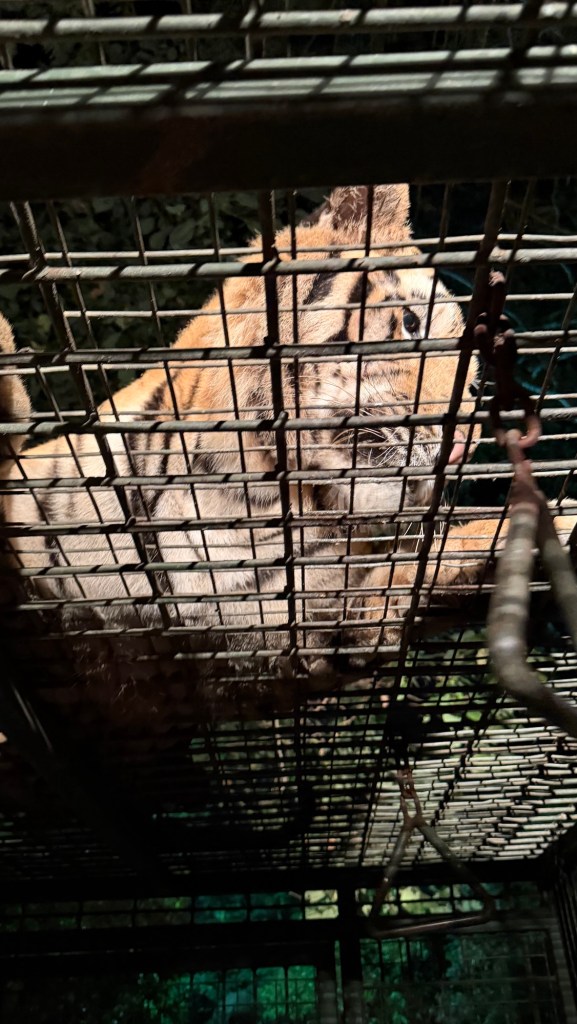
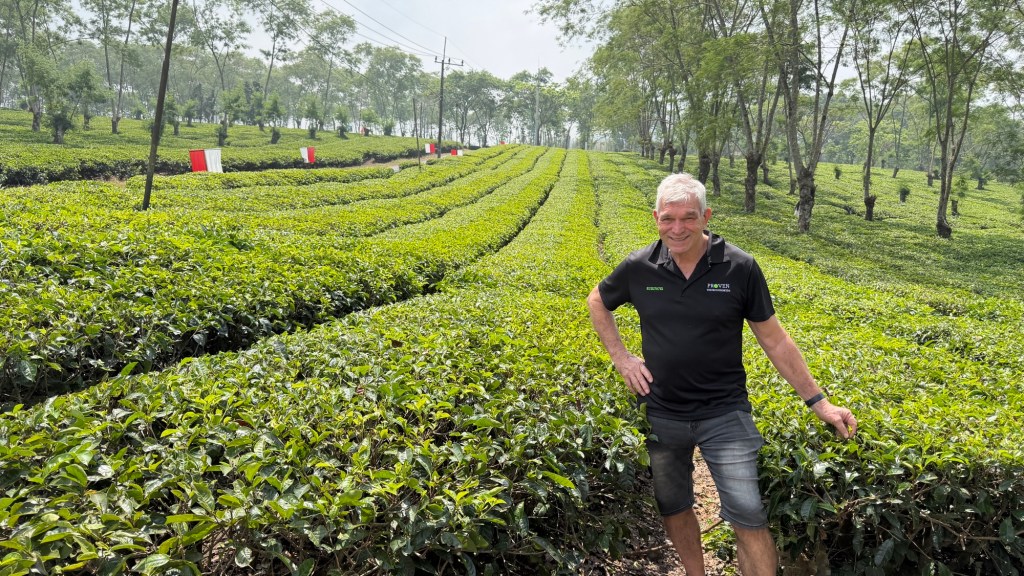
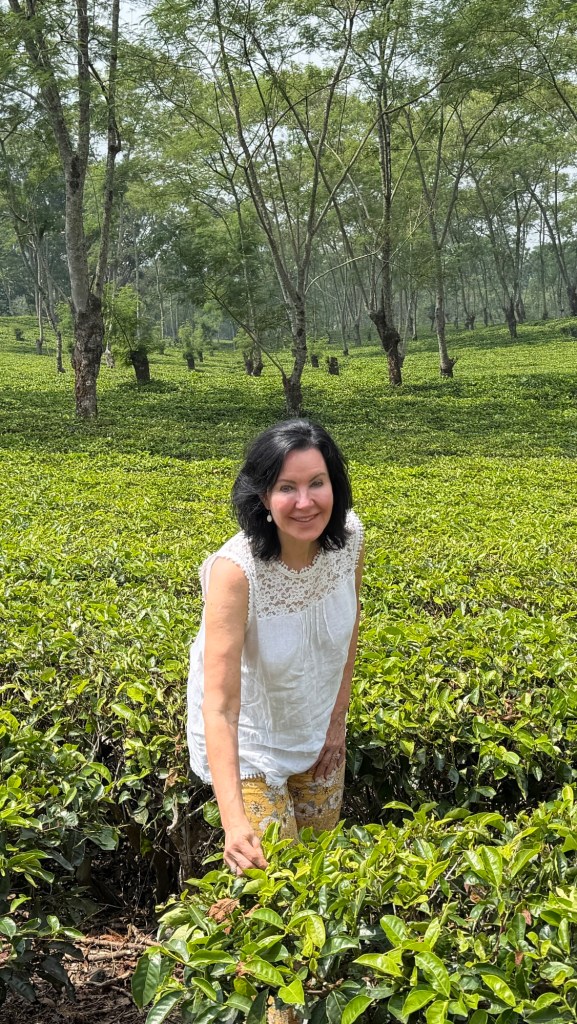
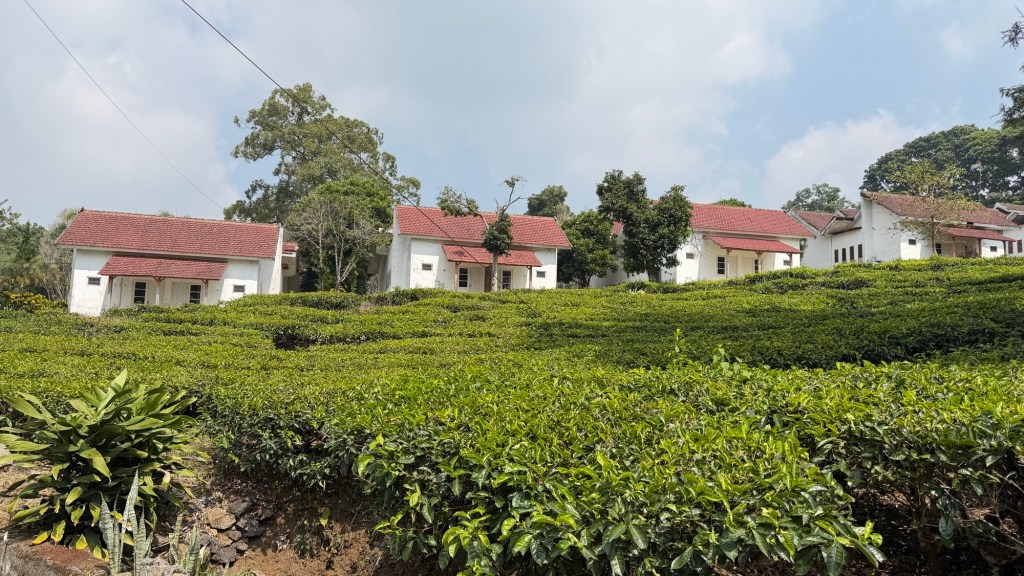
We were met by a guide, then proceeded to have an hour’s hike through a tea plantation. It was quite lovely walking through the tea trees, bird spotting, and identifying all the surrounding fauna. The plantations are set out a little differently to those in Sri Lanka- the main difference being they are not terraced. Apparently wild elephants and gaur Indian bison) roam this area. Luckily we didn’t come across either of them! We did see footprints of both though! ( photo of a gaur below)

Next we visited the Tea Processing Factory and Museum. The most important plantation today belongs to Tata Tea, which oversees almost every local public facility. The processing here seemed more automated than what we saw in Sri Lanka. India commands a dominant position as the largest tea producer in the world. Our visit finished with a cup of Marsala tea. 

Onto Tall Trees Resort – tonight’s accommodation, located in the rainforest area twenty minutes out of Munnar. Set amongst stunningly verdant woodlands and explosive cardamom plantations, Tall Trees is a nature lover’s hideaway. It is set on 66 acres of virginal wilderness entrancingly held together by the overarching presence of 569 trees. An electric buggy took us to our gorgeous little cottage with balcony overlooking the forest. It was stunning. You could do little walks, bird watching excursions, tea tasting, plus a spa with full services available. We only had time for a short nature walk, a dip in the jacuzzi, and a sit around the bonfire before dinner. We really needed a full day to enjoy all the activities the resort had to offer. Lovely peaceful stay. 

Sri Lanka, Southern India and the Maldives 2026 (3)

Southern India 

Day 16 (continued)

Wednesday 21st January 

Colombo to Chennai, India 

22-30 degrees 

After a very pleasant 90 minute flight to Chennai, we went to collect our bags – Frank’s was missing. Turns out Customs wanted to do a check on it. There was no issue, and we still have no idea what the query was, but it did mean our exit from the airport was delayed. My bag a problem last time, Frank’s this time! 

Our local representative from Total Holiday Options, along with our driver, were patiently waiting for us on arrival. The drive from the airport to our hotel — the Taj Connemara in Chennai — took almost an hour, and if we ever thought Sri Lankan traffic was chaotic, this was traffic on steroids! At one point we witnessed an “incident” where a bus clipped a car and simply kept going. Meanwhile, motorbikes, tuk-tuks and cars flowed around the scene without so much as a pause, as if nothing at all had happened. Welcome to Chennai!

We arrived at the hotel to find the entrance in complete darkness — apparently the power had tripped, although it flickered back to life about five minutes later. At this point it was starting to feel like a full-blown comedy of errors. That said, once illuminated, the hotel was absolutely stunning.

Our room was huge, beautiful and overlooked the pool… but it came with an unexpected bonus: a very loud, persistent buzzing noise. We searched everywhere and couldn’t work out where it was coming from. There was no way I was sleeping through that racket, so reception came up to investigate — still no answers. Then, suddenly, the mystery was solved. Frank’s razor had switched itself on inside his bag! We couldn’t believe the noise such a small object could make.

With all dramas finally resolved, we headed out for a short walk around the neighbourhood. “Short” being the key word — street vendors had taken over the footpaths, forcing us onto the road while a million cars, motorbikes and tuk-tuks whizzed past. We ducked into a shopping centre briefly, but the enthusiastic sales pitches quickly wore us down. Clearly, the day had already taken its toll.

So it was back to the sanctuary of the hotel for a quiet dinner and some much-needed calm. Tomorrow… we’ll be ready for India!

Day 17

Thursday 22nd January 

Chennai

21-29 degrees, sunny 

Formerly known as Madras, Chennai was formed from a cluster of villages set amid palm-fringed paddy fields. Parts of the city bear testimony to the city’s antiquity. Tools from the Paleolithic Period have been unearthed at these sites over the years, pointing to the settlement of prehistoric humans. Fast forward, the Portuguese landed here in the 16th century and by the 17th century, the region had fallen into Mughal hands, who granted the British East India Company rights to its land. Colonial rule marked the beginning of the city’s growth as a major commercial centre and it developed into the administrative capital for the British colonial empire in southern India. After independence, it became the capital of the state of Tamil Nadu. 

Chennai is now a dynamic mix of the old and the new, with its stately colonial structures juxtaposed with modern high-rises, and a network of metro lines connecting the city’s historic districts to its many technology parks. Population of Chennai is 12 million. Most people speak Tamil, English and maybe Hindi. 

Sharm, our local guide today, and our driver Guti, met us at 9am. Out we ventured to brave the traffic – it hadn’t improved from the day before. You need nerves of steel just to be a passenger! 

Our first stop was a guided tour of Kalakshetra, a school of art and music that encourages exponents of Bharatanatyam, Carnatic music, traditional weaving and designing. Here students can live and study dance, art and music. We saw the students practicing in their classrooms, and also the auditorium where they perform. 

Next stop was Kapaleeshwarar Temple, the largest in Chennai. The main deity, Shiva, is symbolized as a peacock (mayil), thus giving the area its original name, Mayilapura, the “Town of the Peacocks”. According to legend, Shiva’s consort, Parvati, assumed the form of a peahen to worship Shiva. The present temple was built after the original was destroyed by the Portuguese in the 16th century. We were not allowed inside the buildings as we are not Hindi, but could walk around the grounds. There was very loud music playing as we wandered around – I found it very distracting. 


Close by was the Basilica of San Thomé, built over the tomb of the saint. It is a Gothic-style structure from 1898. It has an ornate interior with stained-glass windows and a towering steeple. The crypt is said to contain a small bone from the saint’s hand and the weapon that killed Thomas. This is one of three churches in the world built on a tomb of an apostle.

The CSI St. Mary’s Church in Fort St. George is the oldest Anglican Church in Chennai, built 1678. It is a beautiful sanctuary of faith and history, standing as a testament to the enduring spirit of Chennai’s colonial past. Nestled within the historic walls of Fort St. George, this church is not just a place of worship but also a living museum of architectural and cultural heritage. 

After St Mary’s we drove along the Marina which winds along the coast next to one of India’s largest urban beaches. Described as “one of the most beautiful marine promenades in the world”, the Marina is the perfect spot to escape the humid heat of the city and enjoy the sea breezes. Lovely beach, but can’t say it remotely competes with our beaches! 

By this time it was 3pm. Sharm let us stop at an underground liquor store to buy some wine (not sure why it is  underground) then we went back to the hotel to cool off. 

Once refreshed, we set off on foot to a different shopping centre — a real-life obstacle course. We zig-zagged through traffic, kept one eye on the road and the other firmly on the footpath (where cow dung is clearly considered a local feature), and tried not to stare too long at the electrical wires overhead and on the ground. Honestly, the tangled cables alone deserve their own tourist attraction — equal parts fascinating and mildly terrifying. We didn’t stay long at the shops – mostly brand name stores that don’t really interest us – it was more just to explore the area. 

Today we were greeted by a new driver, Pradeep, to drive us to Thanjavur, the Rice bowl of Tamil Nadu” and known as the Granary of South India lying in the deltaic region of the famous river Cauvery and crisscrossed by a lengthy network of irrigation canals. Thanjavur rose to glory during the later Chola Reign between 11th and 14th centuries AD and became the centre of learning and culture. It is also known for its exquisite handicraft’s bronzes and musical Instruments.

Back for dinner at the hotel – we are being fairly conservative as to where we’re eating in India. The restaurant at the hotel had a buffet or à la carte. We were happy with the latter after all the buffets in Sri Lanka. Nice chicken masala, dahl and rice – we can’t resist the curry! 

Day 18

Friday 23rd January 

Chennai to Pondicherry

21-28 degrees 

Our driver Guti drove us to Pondicherry this morning – three and a half hours of traffic and horn blowing! The traffic did ease a bit after two hours but then we had to dodge the cows! We passed rice paddies, a salt farm and so many shops along the way. It was disappointing to see so much rubbish along the side of the roads, and in all of villages and towns we passed through.

We arrived at Pondicherry at 1pm where we checked into the Promenade Hotel. We walked across the road to Rocky Beach overlooking the Bay of Bengal- rocky is an understatement!

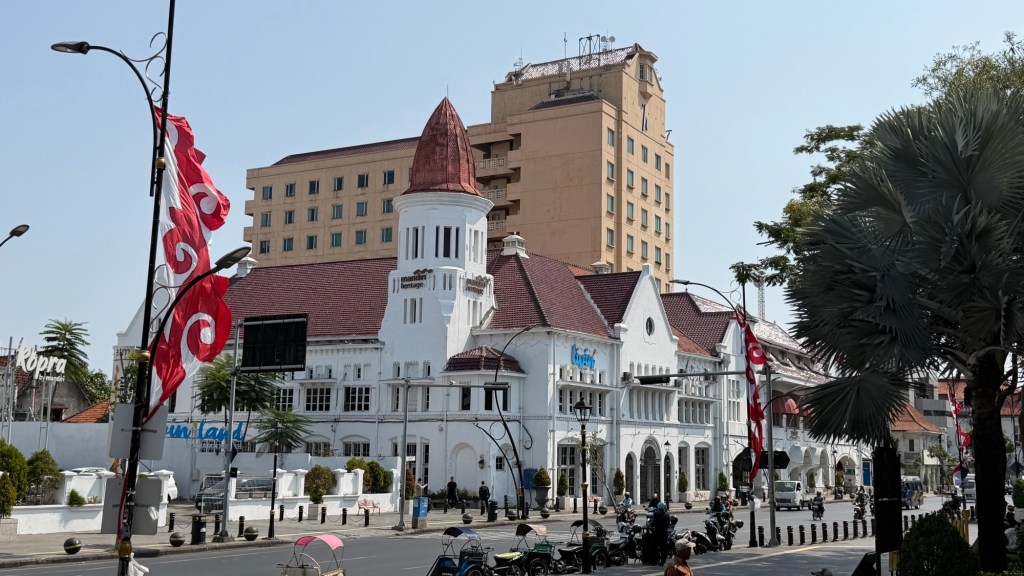
Once a French enclave, Pondicherry(it is now called Puducherry, but I guess old habits are hard to change) retains a distinct Gallic flavour. French is still spoken here, while stately colonial mansions stand in tree-lined streets that are still widely known by their colonial names. This city was ruled by French for about 281 years before independence, and the profound influence of Southern France is still very prominent. Pondicherry has managed to preserve its French aura, from its restaurants offering French cuisine to streets bearing French names. The numerous palm-fringed beaches, splendid backwaters, tiny fishing villages and hamlets make it a pulsating town for visitors.


Guti was back to pick us up at 2.15pm to go to Auroville, a 15 minute drive away. Auroville was conceived by Mirra Alfassa in 1968 as a futuristic global city where people from different castes, religions and nations could live together in harmony. Today there are 550 residents living in Auroville’s International Commune, which is overseen by a foundation. The commune has 40 settlements with names such as Grace, Serenity and Harmony. The centre of the community is the golden Matri Mandir, a spherical meditation centre. It has a marble chamber with a crystal placed inside it that reflects the sun’s rays. The light acts as a focal point to aid meditation. We went to the viewing point to see the dome – visitors can’t enter. It seemed very much like a cult to me. I can’t see myself selling up everything to go and live in a mud hut to devote my life to peace and harmony. The dome itself was very ostentatious – which seemed hypocritical to the way of life that is promoted. It was interesting if nothing else. 

Back to Pondicherry, stopping at a liquor shop to stock up. Because Pondicherry is in a union state, even though it’s in the state of Tamil Nadur (I still can’t work that out), they pay less taxes here. People drive from Chennai to Pondicherry to buy their alcohol. Cash only, no international credit cards.

Starting from our hotel, our guide then took us on a walk exploring the heritage section of the city – the French Quarter. Streets have names like Rue Romain Rolland, Suffren and Dumas. 

Our first stop was Aurobindo Ashram which was founded by Sri Aurobindo in 1926. Set around tree-shaded courtyards, it is a peaceful retreat with a flower-festooned memorial to Sri Aurobindo and The Mother, Mirra Alfassa, his spiritual collaborator, in the garden. There was complete silence inside, and all phones were checked that they were turned off. 

Next Manakula Vinayakar Temple, another Hindu temple, with extremely loud music playing. I find the noise very distracting but apparently it’s all part of the senses experience. We saw a car being blessed by the priest -apparently you take new cars first blessings.

Around the corner was the Governor’s House, all lit up and very grand. 

After our guide left us, we walked along the promenade. There was a hive of activity as there was a lot of preparation going on for the Independence Day parade the next day. Cadets, school children, scouts and guides were busy practicing their marching. The promenade was all lit up in preparation. 

We enjoyed a cocktail at the hotel watching the activity – the Promenade Hotel was situated right on the beach front so a good vantage point. As the dinner menu looked good, we stayed for a nice meal – both enjoying a western meal tonight for a change. No curry! 

Day 19

Saturday 24th January 

Pondicherry – Thanjavur

22-26 degrees, drizzle

We woke to the sound of “left, right, left” – matching practice had resumed! It was shaping up to be a big day in Pondicherry! I think it was a good thing we were leaving today. 

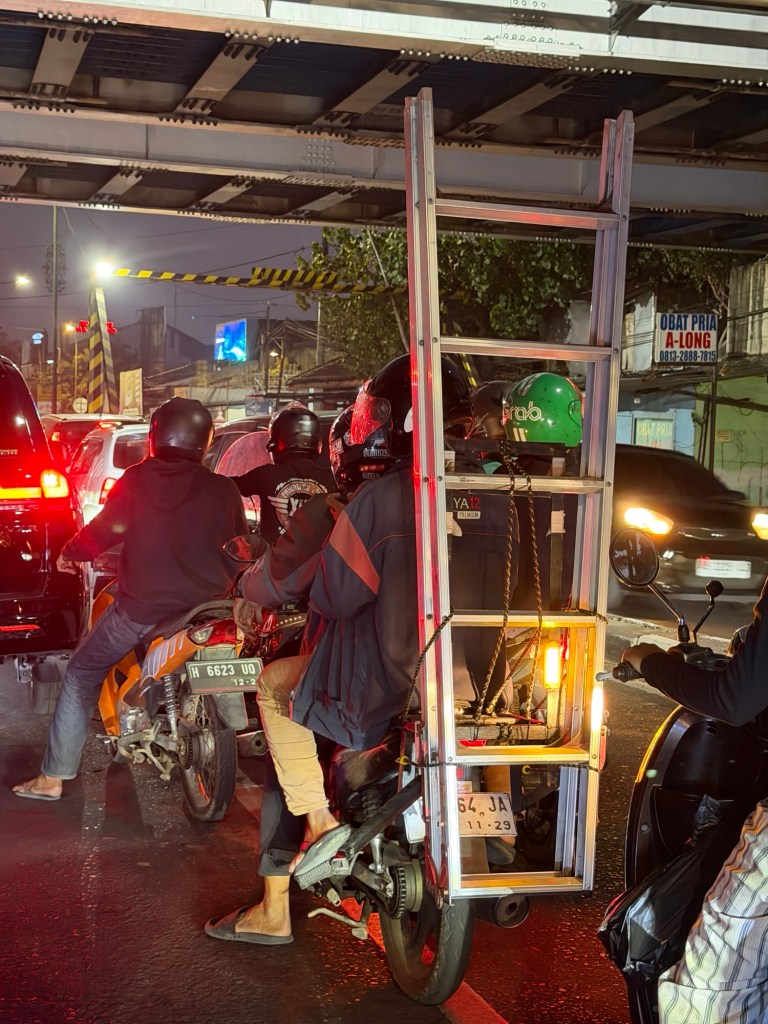
Travelling through banana plantations, rice paddies and other farmlands, we noticed how much cleaner it was in the countryside. The traffic was much calmer as well. It is amazing what you see on the back of a motorbike though – a calf, 4 people on a bike, huge bags of goods, also say seven men plus the driver in a tuk tuk. Never a dull moment on the roads. 

We checked into the Svatma Hotel at midday – a beautiful looking 5 star hotel. However, looks can be deceiving! 

First we took a walk  around the surrounding streets – saw several schools which were in operation even though it was a Saturday. It was an eye opener walking along the roads, seeing how the local people live. It seems a very poor neighbourhood. 

Back at the hotel, we decided to order a coffee. Five staff members, a full committee meeting, and 40 minutes later … success. Getting a spa price list took three separate attempts, each more hopeful than the last. And the wifi? A complete work of fiction. The real entertainment, though, was listening to Frank valiantly trying to explain—using hand gestures, patience, and increasingly creative phrasing—that the wifi was not working. The staff nodded enthusiastically, smiled warmly… and achieved absolutely nothing. I do have to say we are enjoying the Indian coffee -and the triple pour that goes with it.

At 3pm our guide met us to visit Brihadeshwara Palace which dates back to 14th century AD. It is a fascinating building with huge corridors, spacious halls, decorated rooms, tall observation towers, beautiful stucco works, wonderful fresco painted walls and ceilings, an underground tunnel and intricate carvings. 

This majestic palace was built originally by the Nayaka rulers as their royal residence, and was later remodelled by the Marathas. The Rajaraja Museum and Art Gallery was established in 1951 and has an impressive collection of bronze and stone idols dating from the 7th to the 20th centuries. rulers. The Library is the most important reference libraries in India, with a fine collection of rare palm-leaf manuscripts and books collected by the versatile and scholarly Serfoji II.

Next the Brihadeeswara temple, also called the Big Temple. It is built entirely from granite. This dramatic monumental temple, the finest example of Chola architecture, is now a UNESCO World Heritage Site. Completed in 1010 CE and dedicated to Shiva, it was built as a symbol of the unrivalled power of one of the longest-reigning dynasties in Indian history. The 64. 8 Mt. tall tower over the sanctum sanctorum, a testimony to the engineering skill of the Cholas. A monolithic Nandhi (Shiva’s sacred bull) is  chiselled out of a single rock. It was an impressive site, and looked quite spectacular when after sunset the lights were on it. 

Back to the hotel — and straight into the shower with great enthusiasm! After removing our shoes at the temples, we’d been padding around barefoot for over an hour and our poor, delicate wee feet were deeply offended by the whole experience. They are clearly not designed for holy ground, hot stone, or extended spiritual wandering. 

Dinner next… in the so rated five star hotel! The restaurant was vegetarian, that was ok, but everything we wanted to order wasn’t available! Only 15% of what was on the menu was available. After a very long wait, we finally got our meals, the curries (one mushroom, one paneer) were really nice. So worth the wait. Other customers were waiting longer than us. There seemed to be plenty of staff, all with nice smiles, it was just that no one seemed to be able to do anything. 

As the hotel advertises itself as “a brand new centre of holistic wellness”, I thought I had better try one of the services. So after dinner, I went to the spa. Despite hearing someone in one of the rooms calling out to say there was no hot water, I had a the best foot massage I have ever had. It felt divine! So there was good with the bad. 

Sri Lanka, Southern India and the Maldives (2)

Sri Lanka continued

Day 10

Thursday 15th January 

Nuwara Eliya

12-19 degrees 

Because we couldn’t do the train ride originally planned for today’s programme – the tracks are damaged due to the recent floods – our excursion was by bus. Our journey took us out of town, venturing further to see the spectacular St. Clair and Devon Falls that cascade down the lush green mountains of the region. The countryside is just stunning. 

Known as Little Niagara of Sri Lanka, St. Clair Falls is one of the widest falls in the country. The nearby Devon Falls was named after an English coffee planter by the name of Devon, whose plantation is situated close by. 

Tea and ginger biscuits were the order of the day at the very colonial St Claire Tea House.

As we travelled, we passed little villages where the tea pickers live. Tea production is highly labour-intensive. Tea leaves are still plucked by hand, mostly by women. The majority are descendants of the Tamil labourers who were brought from South India to work in the plantations by the British in the 1870s. Their wages are low and living conditions are poor – they often live in barrack-style buildings with only one room. The government is now starting to provide small houses for the workers. The workers are transported to the farms, then work long days. Birth rate is high as they encourage future tea pickers, education is provided free for the children. 

Back at our stunning accommodation, we were treated to a lovely high tea, delighting in a range of locally sourced teas and delicious finger food. I loved the chai masala tea – you could have it hot or cold-I enjoyed it hot. 

Today we found ourselves in the midst of a Hindu festival, Thai Pangol, which brought the town to a gentle standstill. Many shops were closed, but the streets were anything but quiet. Locals dressed in their finest, vibrant saris, clearly relishing the occasion. There was a wonderful sense of celebration in the air — processions winding through the streets, colour, music, and an unmistakable buzz of joy and tradition. 

We had the evening at leisure – no dinner required after our high tea, just a drink or two and a chance to relax. 

Day 11

Friday 16th January 

Nuwara Eliya – Udawalawe – Yala

12 – 28 degrees

Priya had a treat in store for us this morning: a train ride! While only a short stretch of the line is currently operating, it was more than enough to capture the magic. We drove through remarkably productive farmland first — neat raised garden beds overflowing with every vegetable imaginable, hothouses filled with strawberries, and pockets of forest adding a touch of wildness to the landscape. Surprisingly an abundance of Iron bark and gum trees – all introduced, but growing well. 

A tuk tuk got us back to the hotel in time for a cool off in the pool,  before happy hour and dinner.  Another wonderful day! 

At Ambewela we boarded the train land spent a blissful hour rattling our way to Haputale. Windows wide open, cool mountain air rushing in, and jaw-dropping views unfolding at every bend — rolling hills, misty valleys and endless shades of green. Short ride or not, it was utterly spectacular and easily one of those  moments that stay with you. 

At Haputale, Karu and Kalum met us with the bus. We continue to make our way down the mountain, stopping briefly to witness the gushing water of the incredible waterfalls at Ella,  before continuing to Udawalawe. Because the train ride was an extra for the day, it was quite a long day. 

Once at Udawalawe, we visited the incredible Elephant Transit Home  and learnt about its extensive rehabilitation program. Established in 1995, the Elephant Transit Home rehabilitates orphaned elephant calves until they’re strong enough for release back into the wild, usually up until the elephant is age 5. This special place is situated on the western border of Udawalawe National Park, where the elephants get the opportunity to roam free. The elephants get fed five times a day. We were able to see plenty of adorable calves being fed during feeding time. They were just gorgeous. I loved listening to them squeal when they were getting impatient to be fed. 

The Asian elephants are smaller than the African elephants, with much smaller ears. Only the males get tusks, and then only 5% of them. These tusks are solid. In contrast, all African elephants get tusks, but they are hollow. Poaching is illegal. 

Waving goodbye to our new elephant friends, we make our way to one of Sri Lanka’s most premier eco-tourism destinations, Yala National Park —the gateway to some of the island’s incredible wildlife. Established in 1938, Yala National Park boasts a diverse range of habitats, including scrub jungle, brackish lagoons, lakes, and rivers that leopards, elephants, wild pbuffalo and more call home.

We checked into the Ekho Safari Resort which is located on the banks of the man made Tissa lake. Our room overlooked the lake, and was a great spot for sitting and watching the bird life. Pre dinner drinks and dinner soon followed. We had the Leopard Cocktail tonight – doing all the rituals in hope we see a leopard tomorrow. 

Day 12

Saturday 17th January 

Yala 

22-31 degrees 

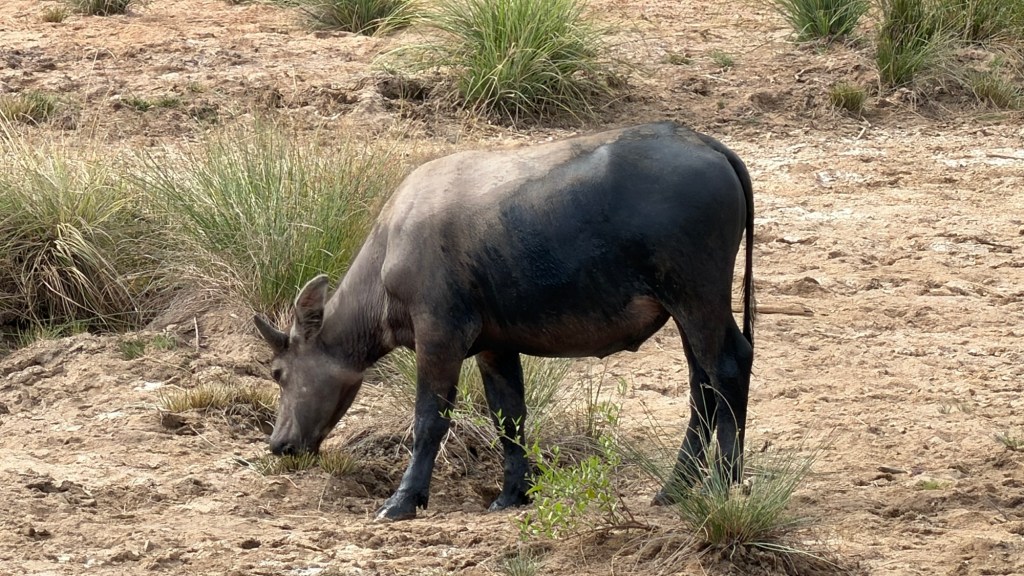
After breakfast, we had some free time so we walked around the lake’s edge into the town called Thissa. The lake was artificially created 2300 years ago. Along the water’s edge water buffaloes blissfully grazed and bathed, oblivious to our presence. There were people swimming and frolicking along the causeway. Back at the hotel, we had a swim in the pool which was very refreshing after our hot walk. 

At 2pm we were picked up by two Toyota jeeps and headed out on an incredible safari through Yala National Park, established in 1938.

Punctuated by rocky outcrops, the park’s sprawling landscape varies from thorny scrub forests and open grasslands to dense jungles and coastal lagoons. The park features a wide range of fauna, including elephants, spotted deer, samba deer, water buffalo, crocodiles and, leopards. Home to around 70 leopards, Yala National Park is said to be one of the best places in the world to observe and photograph these felines. Apparently they are all named. I can report we did see one leopard, Lucas. This magnificent cat was languishing peacefully, high up on a tree branch, oblivious to all the photographers below. 

The birdlife here is also very diverse, with migrants swelling the numbers of the resident population in winter. Eye catching peacocks roamed freely. There was magic to be found with every twist and turn. The two animals we didn’t set sight on were the very shy black bear and the jackal. 

After four magic hours on safari, we were driven back to our hotel where we keenly jumped into the shower to wash away the dust. A fabulous day!

Day 13

Sunday 18th January 

Yala – Weligama – Galle

22-29 degrees

Farewelling the lush greenery of Yala this morning, our first stop was 36 acre Gradely Cinnamon Estate which is owned by a Western Australian man. During harvest season, they employ 12 workers who carry out the various steps to process the cinnamon. Cinnamon production in Sri Lanka involves a meticulous, skilled process of harvesting and rolling the inner bark of the cinnamon trees. We watched one of the villagers show us the process. They use every part of the cinnamon to make cinnamon quills, oil, and tea leaves. Harvesting occurs twice yearly after the monsoons (June-Dec) for optimal humidity; branches are cut carefully at dawn, and stems must be processed within 120 minutes to preserve their quality. We sampled the cinnamon tea, and purchased the cinnamon oil to use as an insect repellent. 

Soon after, we reached the  seaside village of Habaraduwa to visit a turtle hatchery. Set up to conserve Sri Lanka’s turtle population, we had the chance to see where the turtle eggs are buried in sand after they have been collected from the beach. After the turtles hatch from the eggs, they are kept in a large tank until they are big enough to be released back to the ocean – this process increases the survival rate of the turtles by 50%. This is because the turtle eggs can otherwise be taken by dogs and birds. They are put back into the ocean when they are about five weeks old. 

Making our way along the southern coastline to Galle, we came across the stunning town of Weligama. Here there were beautiful sandy beaches, colourful fishing boats, many surfers and mobile beachfront restaurants. This town is very popular for tourists including many Russians who come here to sunbathe and get a tan in their skimpy bikinis.

The highlight was the famous stilt fishermen of Sri Lanka. They are famous for their unique, iconic fishing method on the southern coast where they perch on a crossbar attached to a pole fixed in the seabed to catch small fish, a skill that emerged from necessity during WWIl, but is now often a staged performance for tourists, although some still practice it for real. It requires immense patience and balance in the shallow waters.

On arrival in Galle, we enjoyed a guided tour of the city on foot, learning about the town’s history and immersing in its stunning colonial architecture. We explored the UNESCO World Heritage-listed Galle Fort, a fantastically preserved colonial sea fortress and Galle’s best known site. The history surrounding this fort was amazing and it survived the devastating 2004 tsunami. Built by the Portuguese in the late 16th century, this old trading port was further fortified by the Dutch and British colonialists. The narrow streets of shuttered mansions and churches protected by the stone walls, bastions and ramparts, are fascinating to stroll through. 

We checked into the Radisson Blu Hotel in Galle – we had a beautiful room overlooking the pools, and the Indian Ocean. Happy hour drinks were followed by another buffet dinner. After dinner we enjoyed a glass of wine sitting on our balcony overlooking the Indian Ocean listening to the waves crashing on to the beach – such a lovely way to end the day.

Day 14

Monday 19th January 

Galle

22-30 degrees

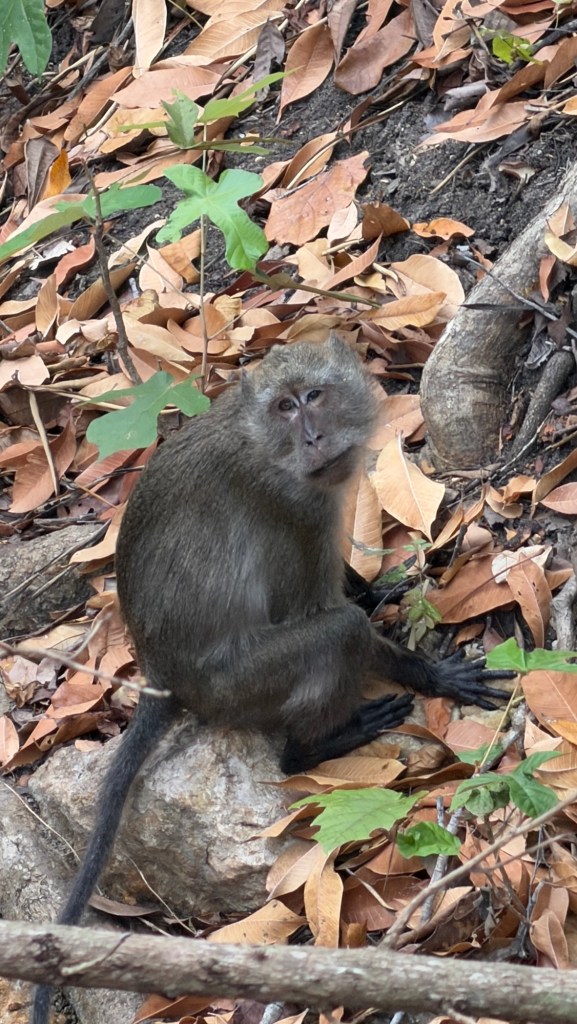
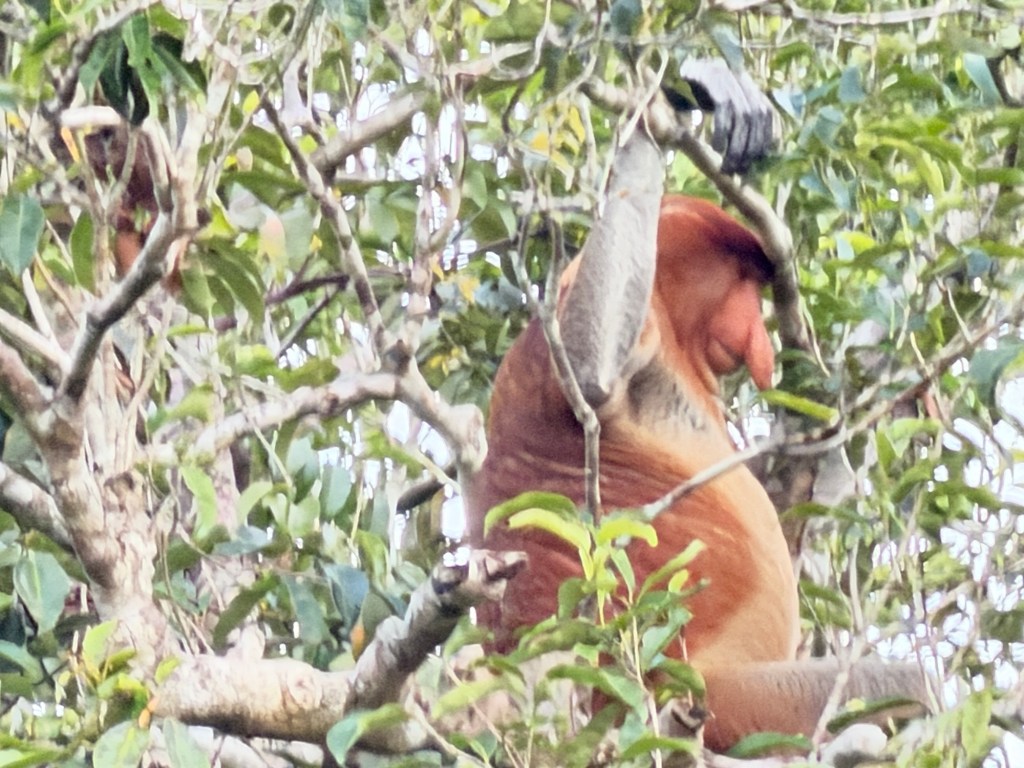
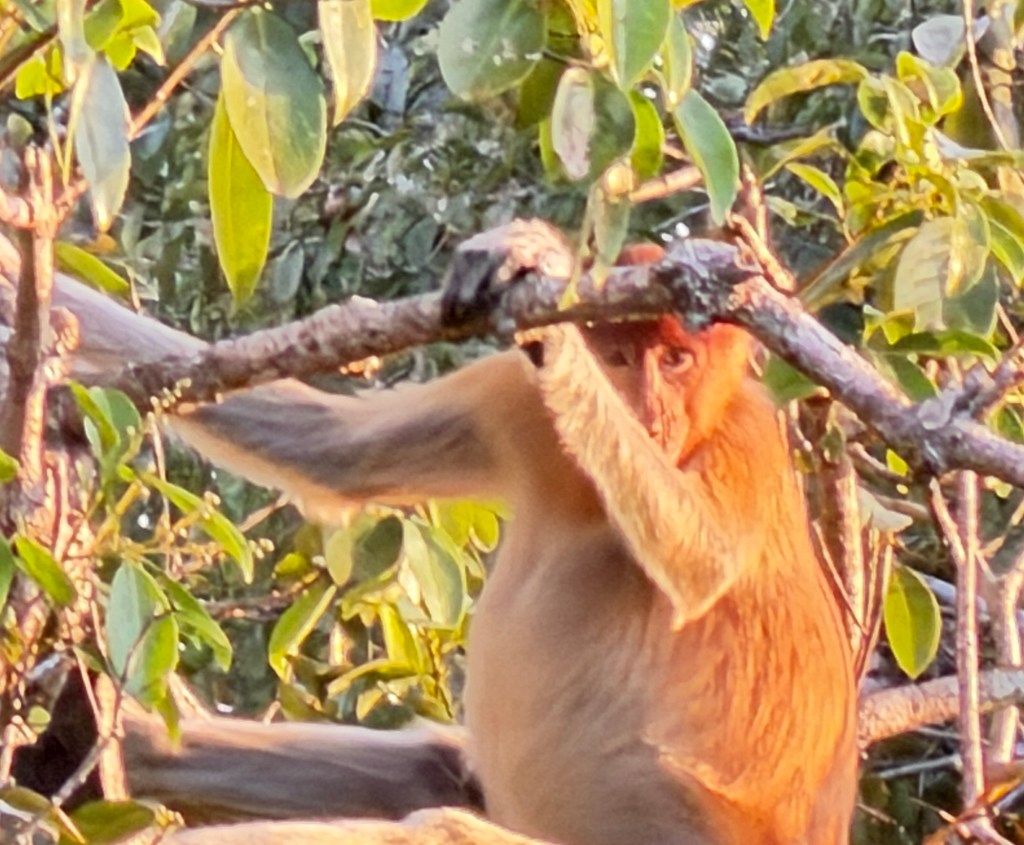
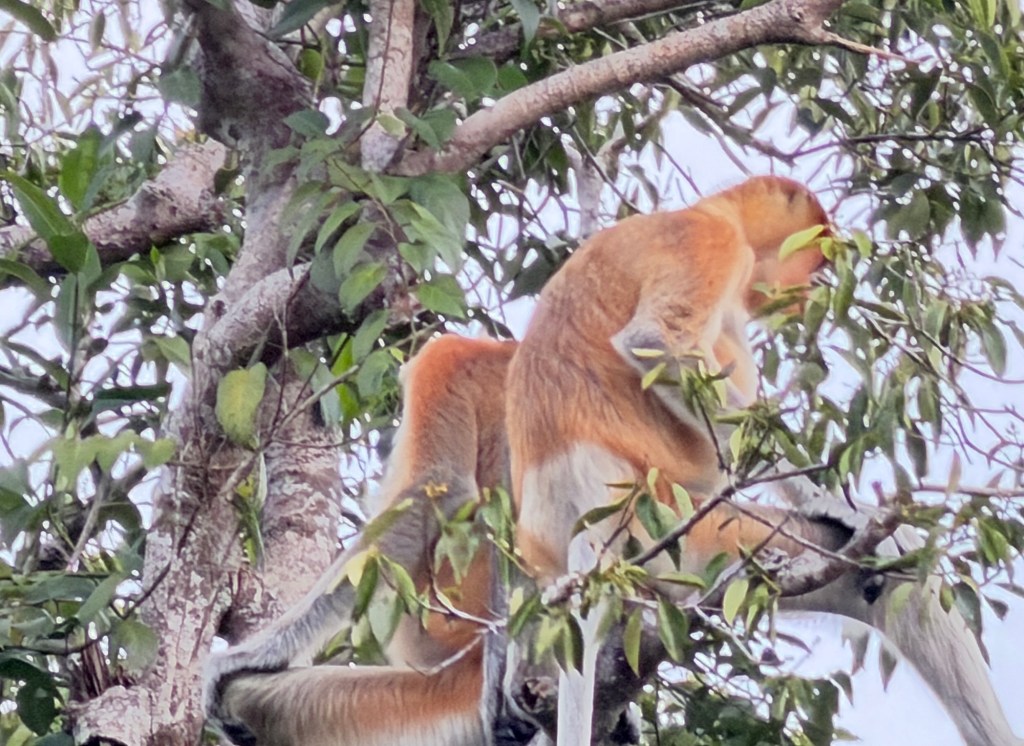
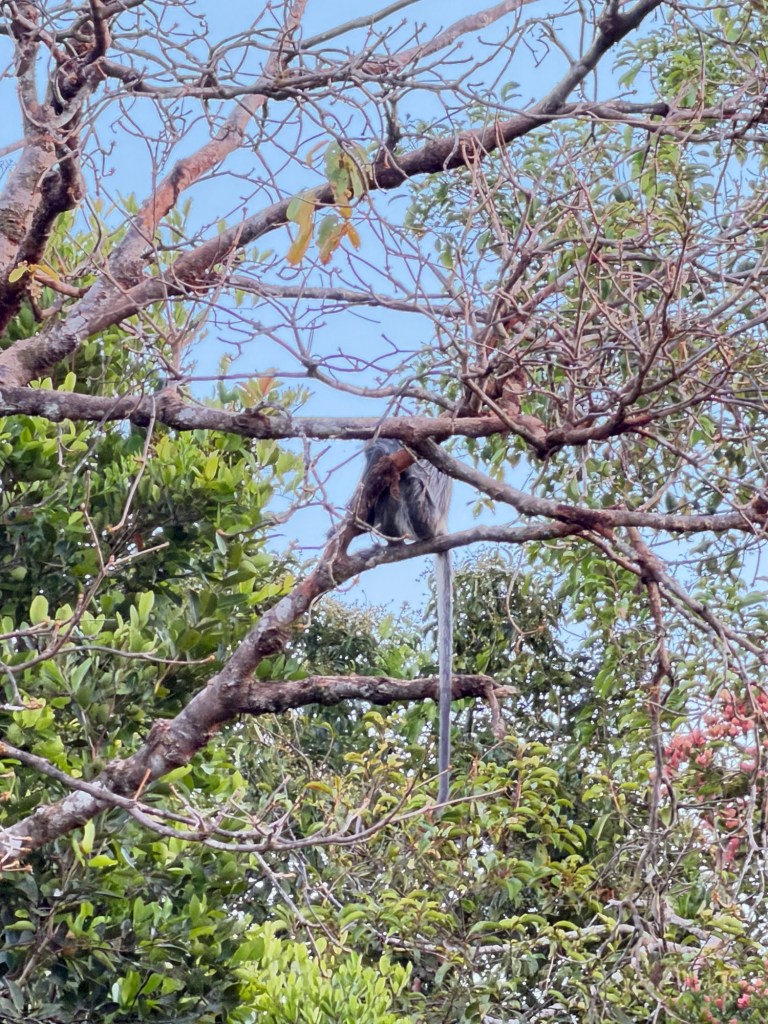
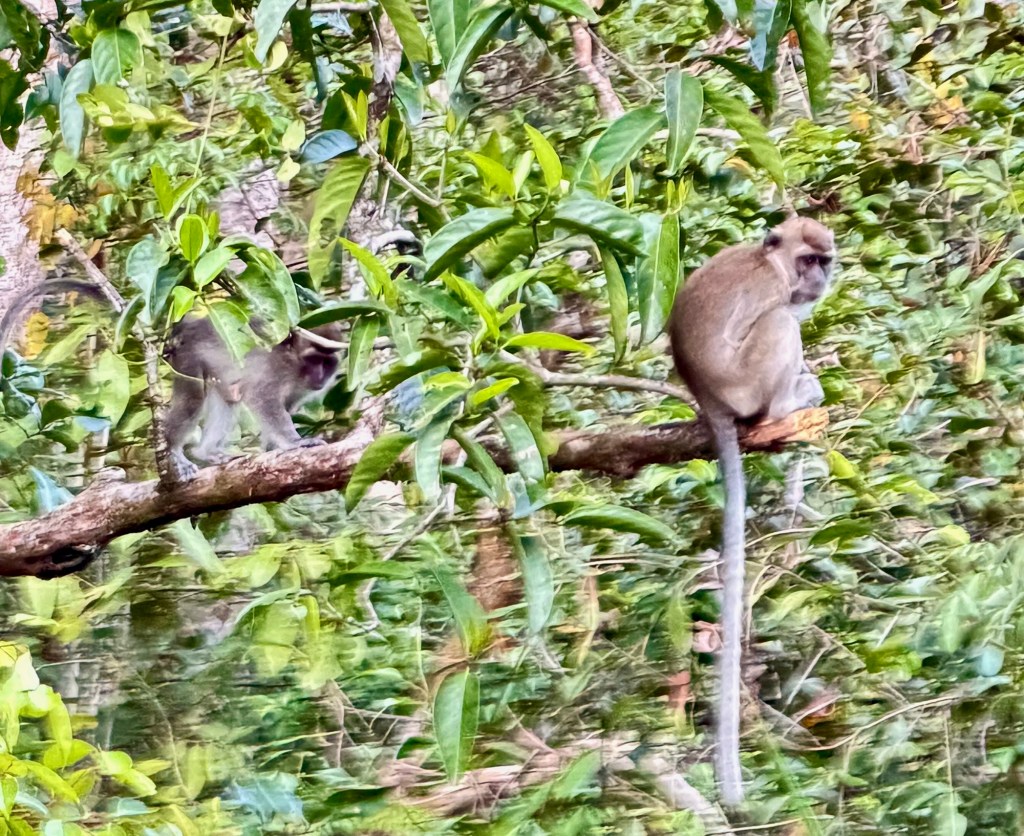
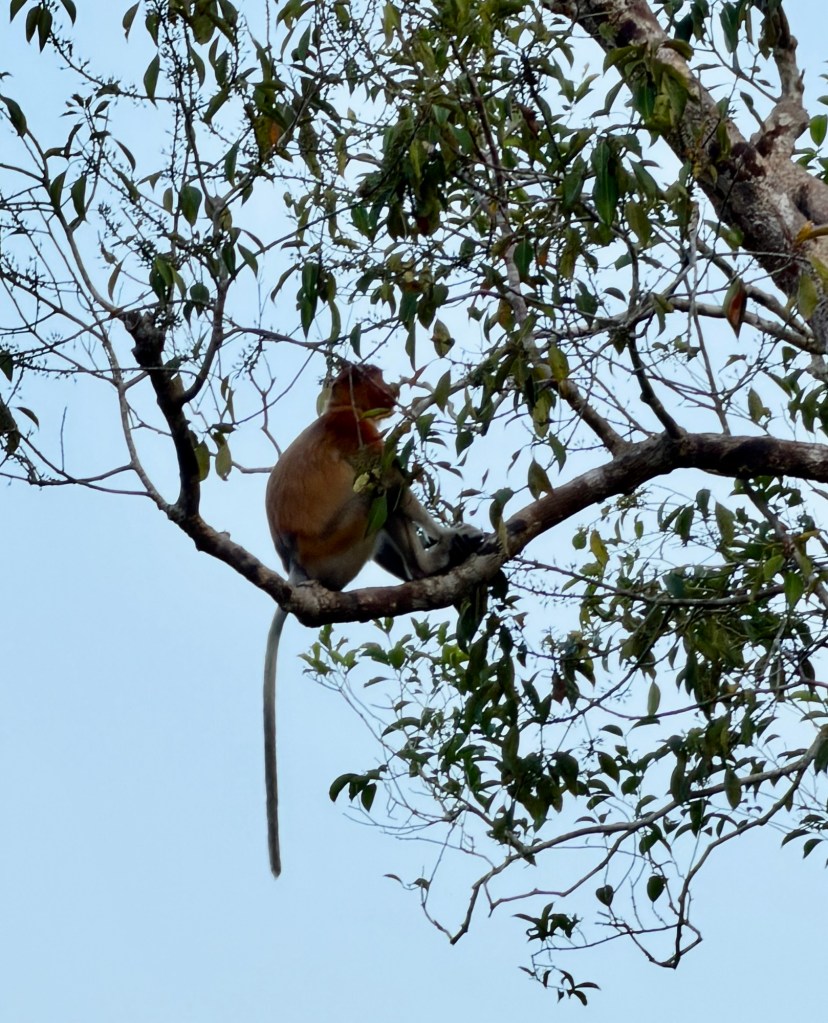
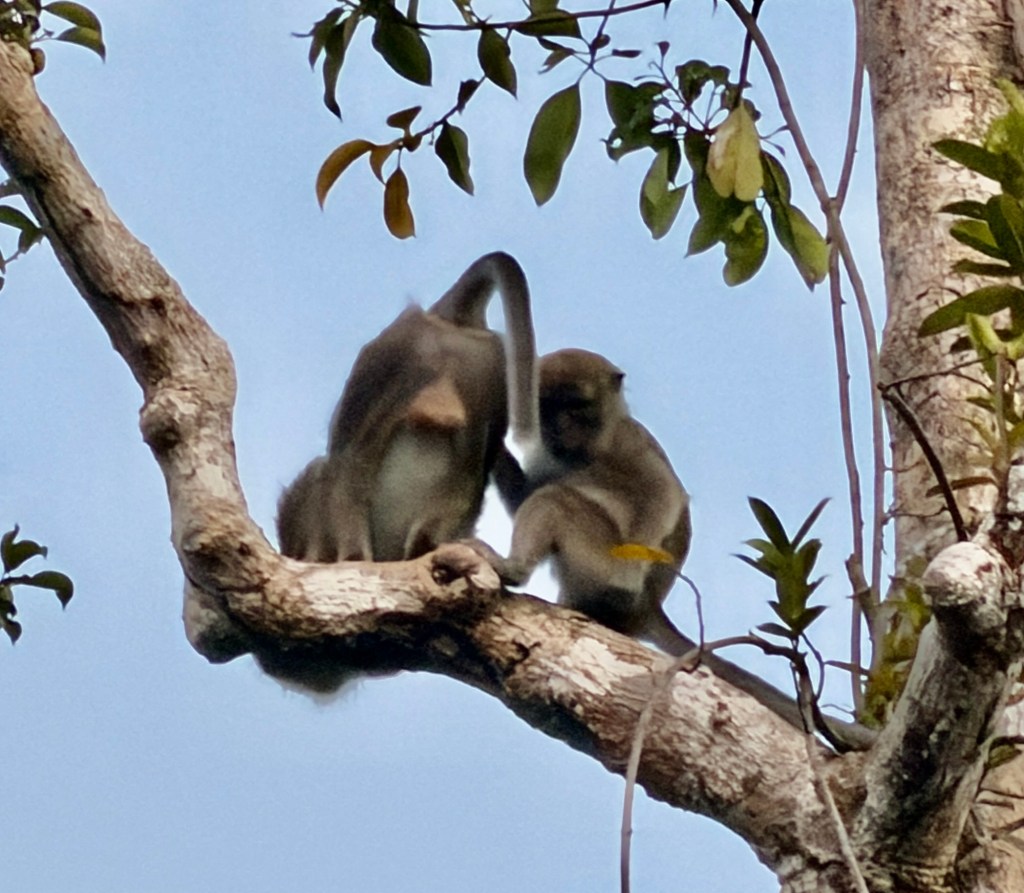
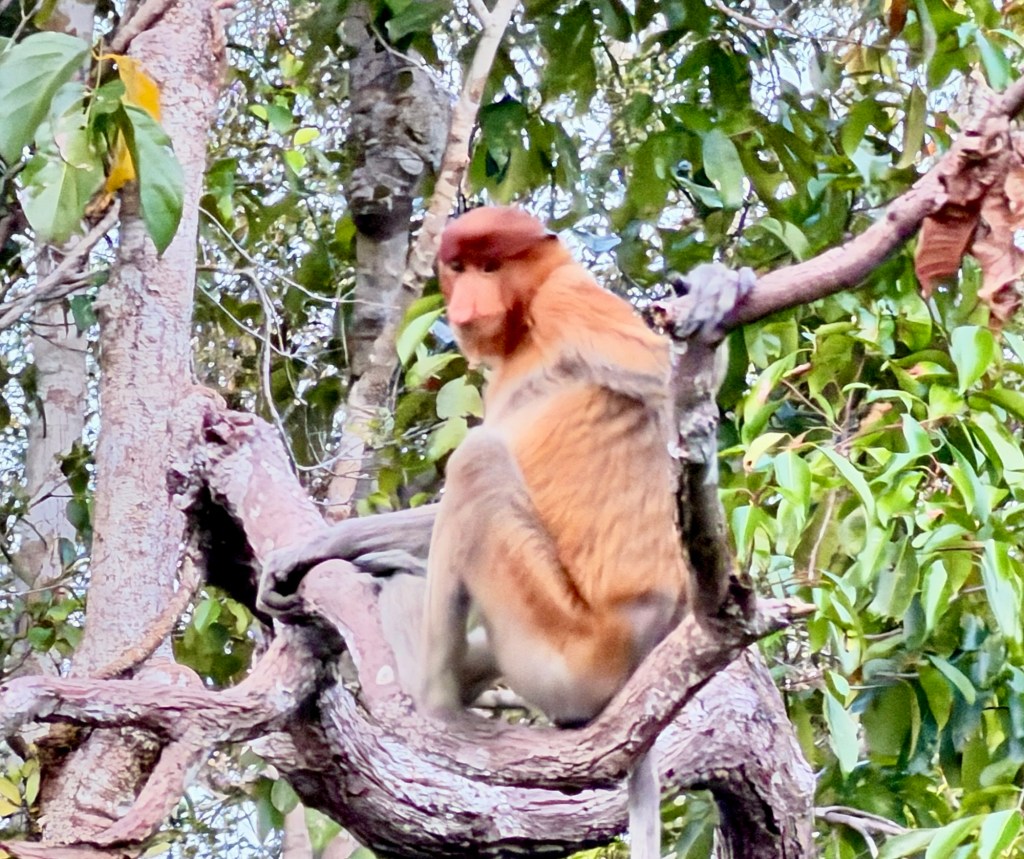
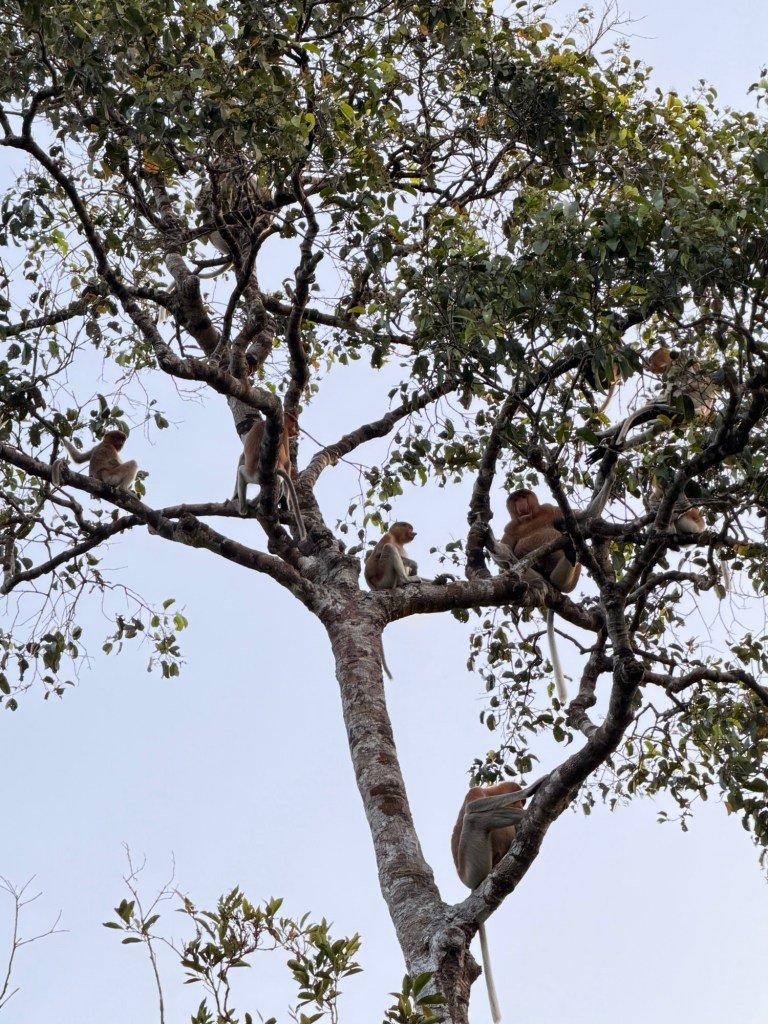
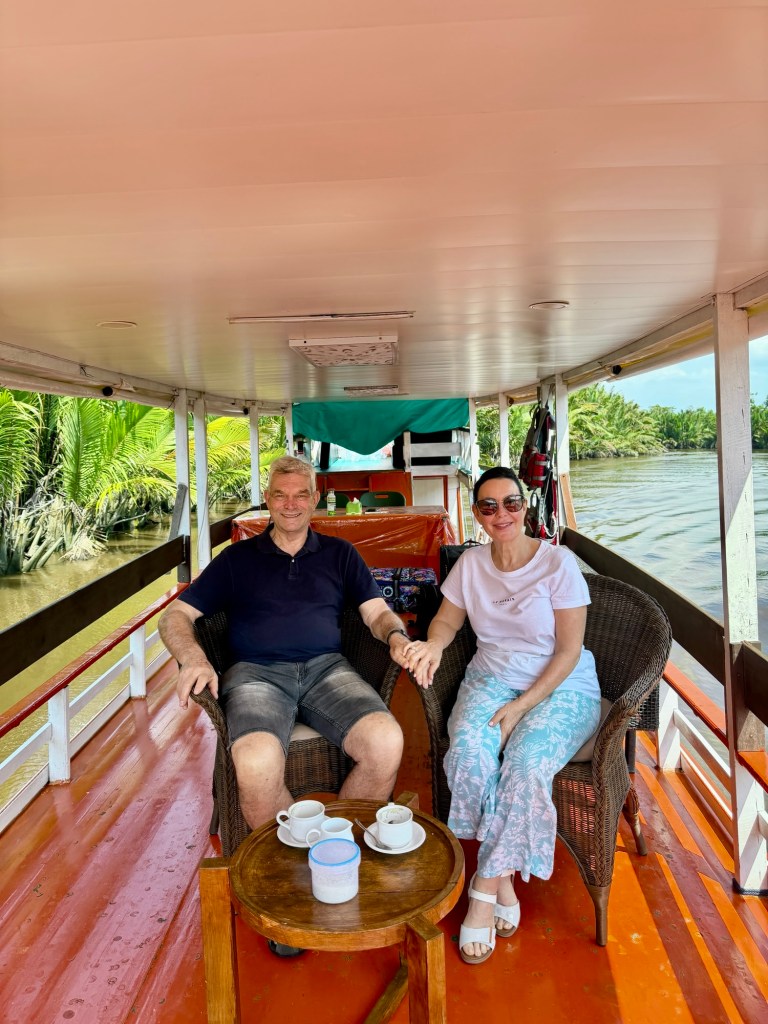
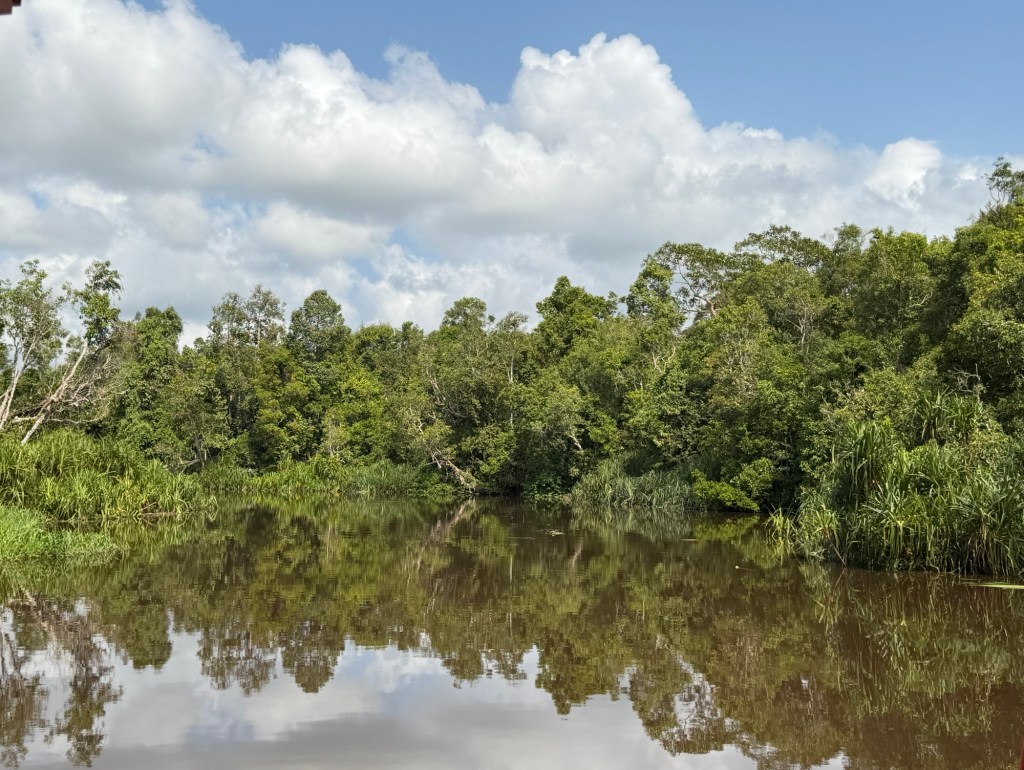
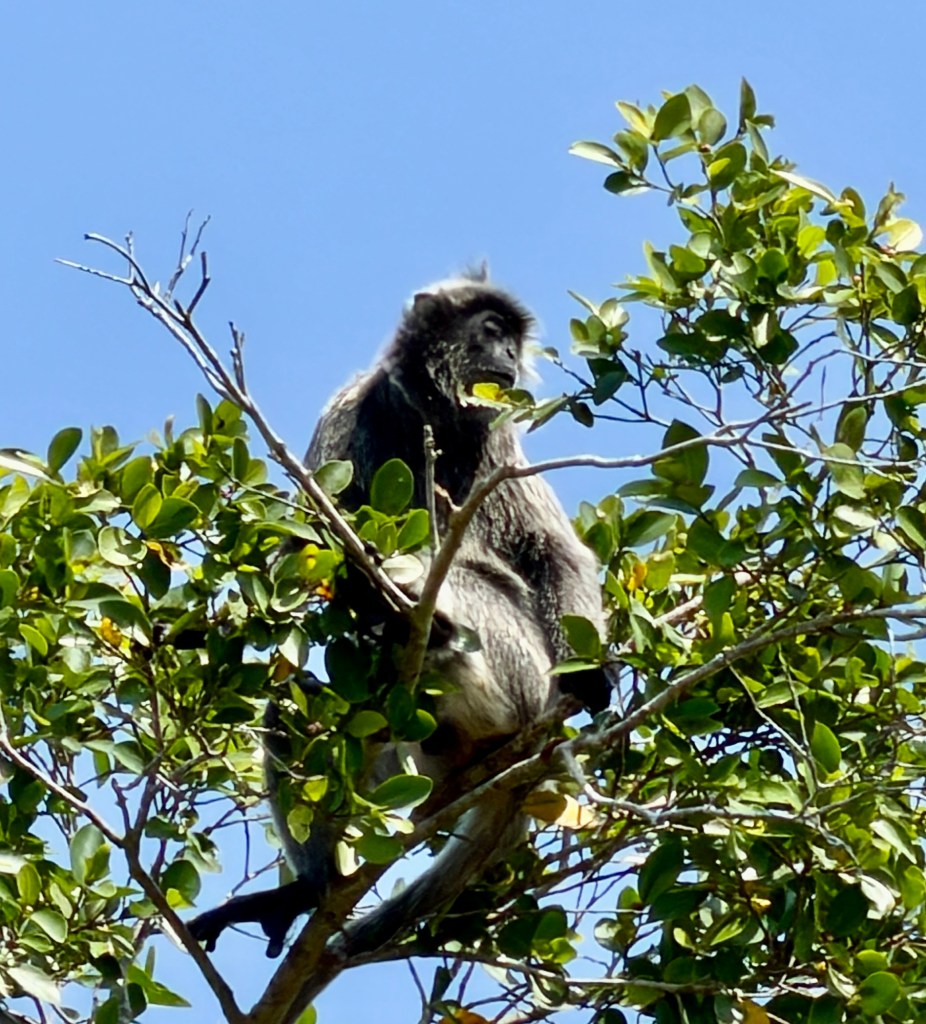
This morning we enjoyed a scenic cruise along the Madu River, meandering through islets forested with mangroves. It was a very relaxing and serene boat ride. We saw the black monkeys frolicking high up in the mangrove branches. Also prawn farms and other birdlife. 

Next we visited the Moonstone Mine in Meetiyagoda. This mine is one of the few places where the semi -precious stone is found in high concentrations, hence the villagers believe this area is blessed by the moon. At Meetiyagoda we saw the deep, narrow shafts where the stones are mined. Also saw how they cut the stones, and wait for it… there was even a gem store! 

On our way back to the hotel, we stopped at the moving Tsunami Photograph Museum which remembers the devastating 2004 Boxing Day Tsunami that inflicted widespread damage to the coast of Sri Lanka. Hard to believe the devastation that occurred because of the tsunami. Approximately 100,000 people in Sri Lanka lost their lives in 20 minutes. The lady who looked after the museum lost her nephew, and her brother was killed two years later in the war. It was a very poignant moment for us all, and made us think twice about what is important in life. The road on which we were travelling was wiped out, as were all the buildings along it. Most people had never heard about a tsunami prior to the event. 

After a late lunch and some down time, Frank and I caught a tuk tuk back to the Fort. We had a lovely walk through Pedlar Street- some nice boutiques, souvenir shops, and an abundance of gem stores. I am positive, that no one leaves Sri Lanka without buying a gem of some sort. 

Day 15

Tuesday 20th January 

Galle to Colombo 

22-30 degrees 

We farewell Galle and travel by motorway to Colombo – a three hour drive with one stop at a local service centre. More rice paddies, banana, rubber, tea and coconut plantations along the way. 

Sri Lanka’s capital Colombo, the ‘Garden City of the East’ , faces the Indian Ocean and stretches along more than 14 kilometres of the island’s western shores. Colombo has long been a commercial centre owing to its natural harbour. Arab traders established a trading outpost here as early as the 7th century, and Kolamba – as it was called by the Sinhalese – became a gateway between Asia and the West. Despite being a flourishing trade centre, the city only reached nationwide prominence with the arrival of the Portuguese in the 16th century. These European invaders built the fort that would become the nucleus of modern Colombo. The Portuguese lost control of the area in 1656 to the Dutch, who then administered Colombo for almost 150 years. In 1796, the city was captured by the British and was declared the capital of Ceylon in 1815. The city continued to prosper throughout the 19th century and has maintained its dominant status in post-independence Sri Lanka.

Colombo is now a bustling city crowded with buses and minivans overtaking the once quiet roads laden with bullock carts. Tree -lined boulevards, colonial buildings, open air markets, temples, lakes, and churches add great character to this city. We enjoyed a city tour by coach, taking in all the significant buildings. It reminded us of Singapore to a degree, with a little bit of Bangkok thrown in! 

We stopped at  Gangaramaya, Colombo’s most intriguing Buddhist temple complex. Built during Sri Lanka’s Buddhist revival, it comprises an unusual mix of minimalist and modern Indian architectural styles. Back by the entrance, the colonial-era building houses the Gangaramaya’s impressive museum. The collection showcases the many weird and wonderful objects that have been donated to the temple over the years, including an impressive collection of vintage cars, a stuffed elephant and the world’s smallest Buddha. 

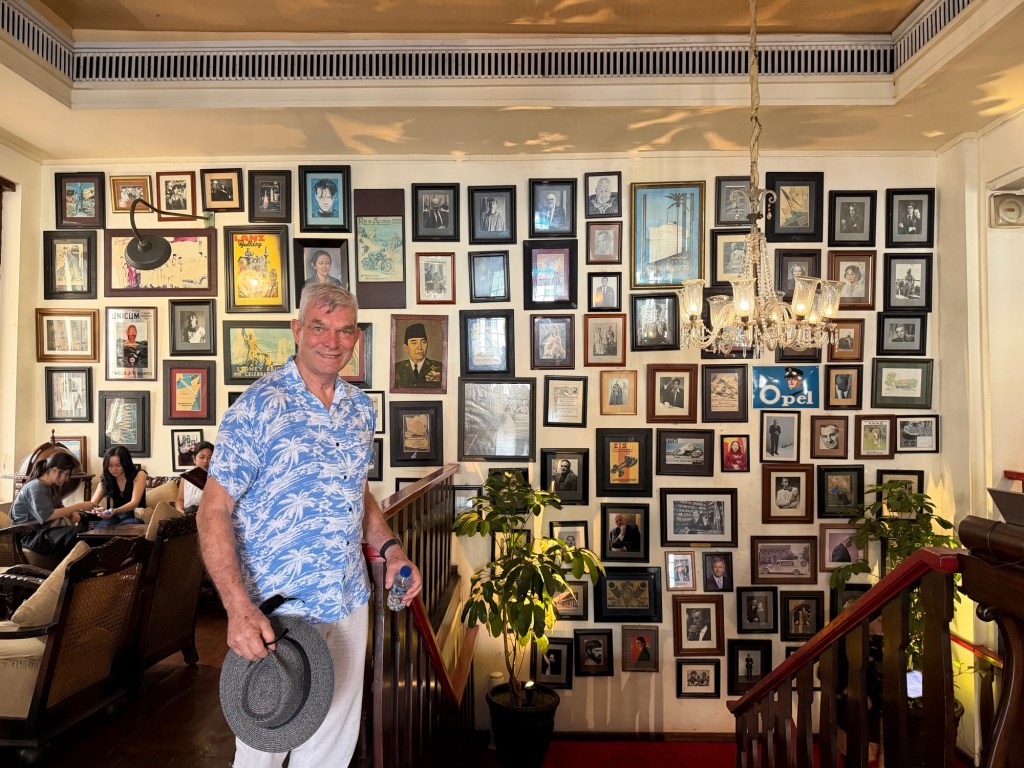
Our lunch stop was the famous Cricket Club Café, a prominent establishment in town owned by two Australians – James & Gabrielle Whight, both from Melbourne. We met the Gaby, who gave us a great rundown of how they started and expanded, to now displaying hundreds of cricket memorabilia. These include autographed framed photographs of famous cricketers, signed bats, signed caps, gloves and shoes used by famous cricketing personalities dating as far back as the 1940’s, which include personal items used by Sir Don Bradman, Ray Lindwall, Shane Warne, Arjuna Ranatunga, Sunil Gavaskar, Joel Garner to name a few.

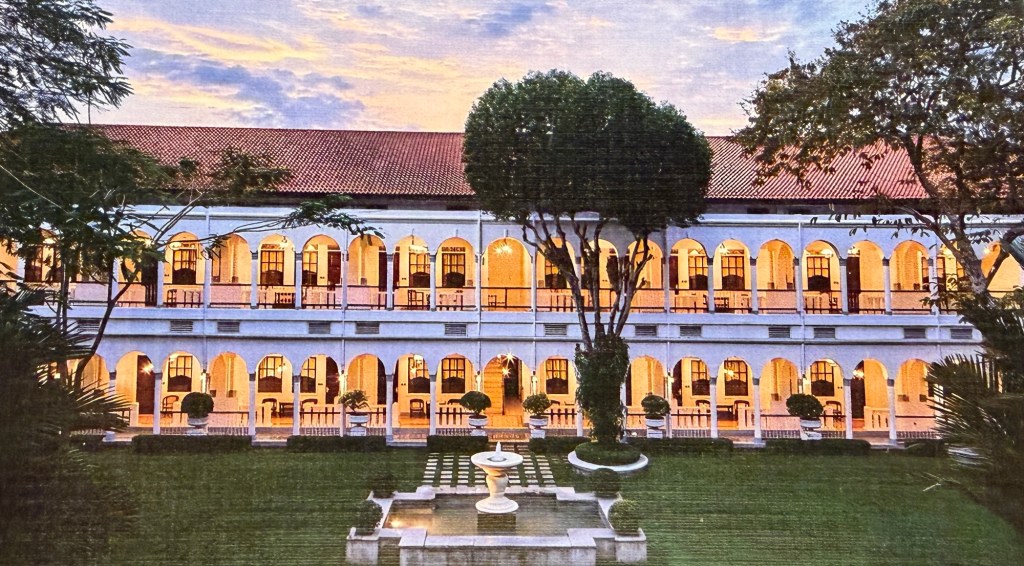
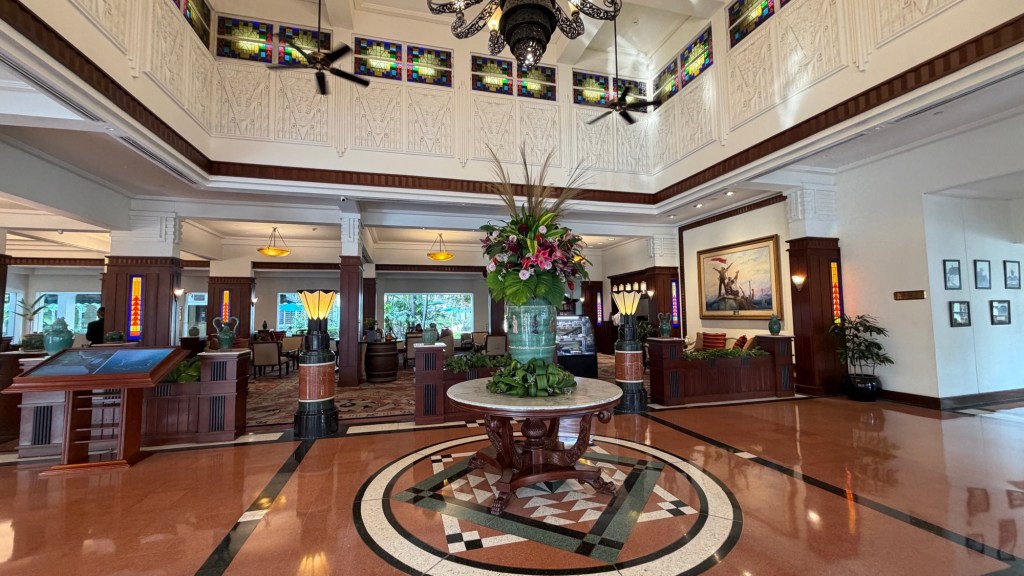
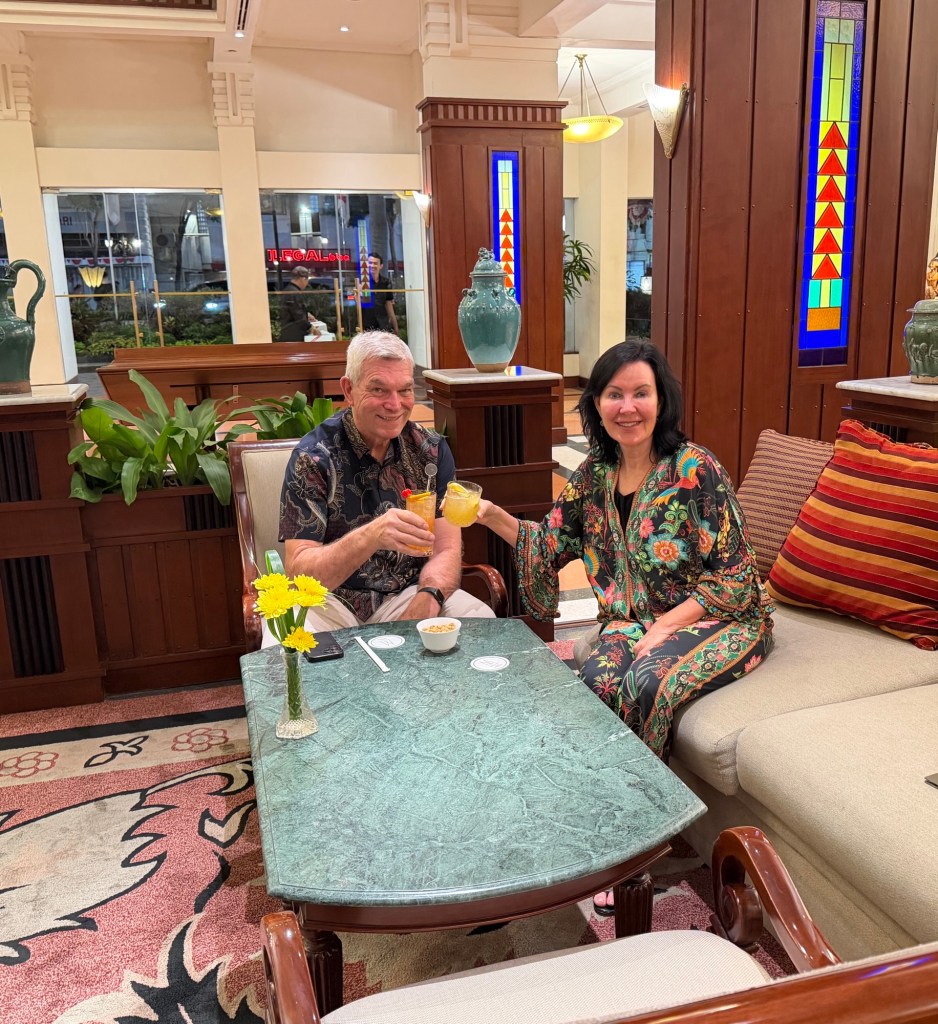
We checked into the historic and stunning Galle Face Hotel. This hotel was established in 1864 and is the oldest hotel in South East Asia. This gorgeous colonial hotel has hosted a veritable who’s who of guests, from Noel Coward to Mahatma Gandhi; their photographs can be seen in the hotel’s attractive Traveller’s Bar. We felt very privileged to have been upgraded to a suite overlooking the ocean. We had room for a party!

After checking in, we walked through Galle Face Green, once the site of horse races, cricket matches and a golf course in colonial times, now one of the city’s best-loved open spaces. It seemed particularly popular towards dusk when crowds descend to fly kites, stroll along the esplanade and munch on snacks from the various food kiosks strung out along the oceanfront. A resident snake charmer and his monkey, kept us entertained for a while. 

At the other end of the park was the largest shopping centre in Sri Lanka – One Galle Face Mall. Although small compared to our Westfield shopping malls, there was plenty to look at for a couple of hours. Of course I had to have a little browse. Frank managed to find some nice shirts for $12 each at one of the department stores. 

After watching the taking down of the flag ceremony at sunset, we enjoyed our farewell dinner at the Veranda Restaurant at the hotel. Another scrumptious buffet! Just too many choices. It was going to be sad to say goodbye to our new friends, and especially our wonderful guide, Priya. 

After dinner we went out to take photos of the Lotus Tower  – Colombo’s largest and most incongruous landmark. At 35 metres high, it is the tallest building in South Asia. Designed to resemble a lotus blossom, a symbol of purity and renewal, this iconic structure reflects the blend of tradition and modernity in Sri Lanka and was only open to the public in 2022. The “petals” covering the summit are spectacularly illuminated in changing colours after dark. 

Day 16

Wednesday 21st January 

Colombo to Chennai, India 

22-30 degrees 

Our flight to Chennai was at 1335 today. We did manage to fit in the tour of our hotel though before getting our lift to the airport. There was a lot of memorabilia including Prince Phillips first car, a 1935 Standard 9 car,  which he purchased at aged 18 in 1940, while working in Ceylon at Lord Mountbattens office. The hotel’s museum had crockery, utensils, guest books, invitations to balls and events, all beautifully displayed in glass cabinets. Fascinating. 

Our pick up promptly arrived at 1000, and 45 minutes later we were at the airport. All processes went smoothly, including collecting our VAT refund. We did get a very pleasant surprise to find that we had been upgraded to business class on this flight. Platinum status seems to open more doors. 

We have been incredibly impressed with our entire Bunnik experience and would highly recommend this tour company. Our guide, Priya, went above and beyond to ensure we had the best possible journey, and his thoughtful little “surprises” along the way always put a smile on our faces.

Frank and I are truly grateful for the unforgettable 16 days we spent in Sri Lanka. We enjoyed wonderful weather, exceptional food, and the genuine warmth of the Sri Lankan people. Our guide, assistant and driver were outstanding, and it’s hard to believe how many amazing places we saw and experiences we enjoyed. I loved every moment of our Sri Lankan adventure.

Special Bunnick extra touches that we enjoyed…. 

Even though there were only 9 passengers in our group, Priya had an assistant, Kalum, who organised all the tickets, bus cleaning each day, and numerous other things. Karu did a magnificent job of driving the bus each day.  

Kalum gave each guest a fresh flower every morning as we boarded the bus

Each day we had a “word of the day” also learnt how to count to ten. We sang a Sri Lankan folk song each day as well. Priya always had a joke of the day. 

A cold washer was given to us by Kalum after being out in the hot weather(often cinnamon scented) followed by a different local fruit each afternoon. 

We were given an aluminium water bottle at the start of the trip, which we could refill with clean water at any time – a few less plastic bottles going to landfill. Kalum filled them at the end of the day and put them in the fridge ready for the next day. 

We were given up to an hour after lunch to have a SCAN – Senior Citizens Afternoon Nap! 

Our bags were looked after at all times – delivered to the room each afternoon, and collected each morning. 

You can see why I’d recommend Bunnick!

Sri Lanka, southern India and the Maldives, January 2026(1)

Sri Lanka

Day 1

Tuesday 6th January 

Brisbane to Colombo

It must be time for another holiday… and yes, we’re off again! This adventure takes us to the vibrant landscapes of Sri Lanka, on to the rich colours and chaos of southern India, and finally to a well-earned slice of rest and relaxation in the Maldives.

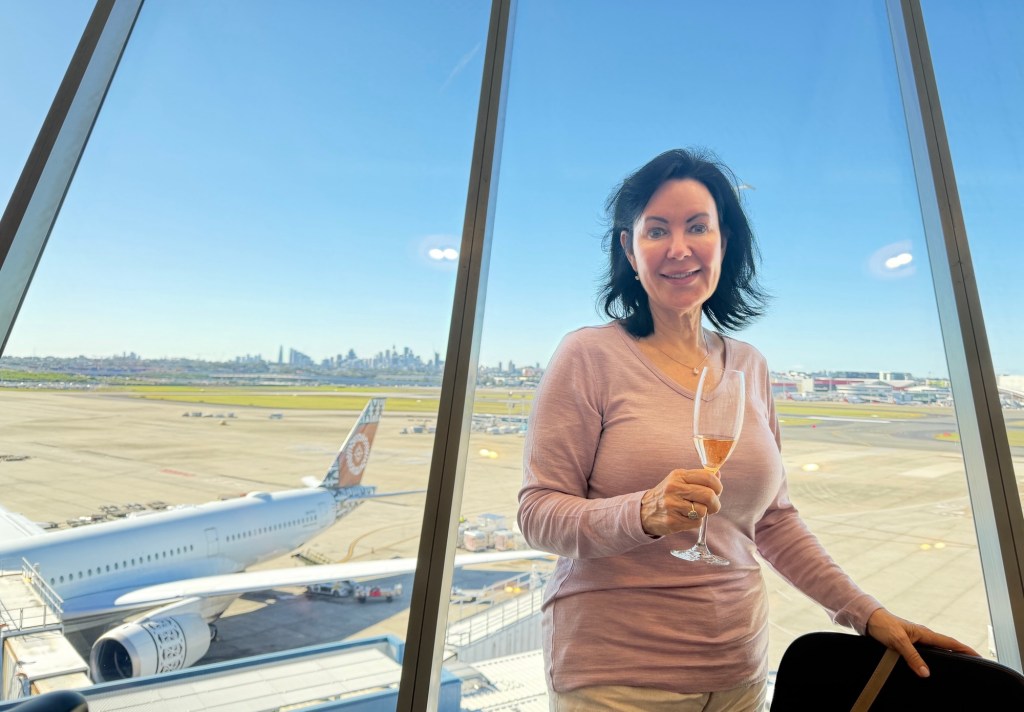
Our Qantas flight to Singapore departed at the very civilised hour of 10:30am. Having very recently reached the dizzying heights of Platinum status, I was eagerly anticipating my first taste of a First Class lounge experience. Alas, Brisbane Airport had other ideas — it was the same lounge we always use! Still, a lounge is a lounge… and really, who’s complaining?

Once onboard, however, the Platinum perks made their presence felt. A special welcome from the purser, followed swiftly by a gin spritz shortly after take-off, set the tone. There were a few other personalised touches along the way too — lovely, though I did feel slightly self-conscious with all the extra attention.

We arrived early into Singapore and this time, redemption! The First Class lounge more than lived up to expectations, delivering fine dining and drinking at its best. The tuna sashimi and Humpty Doo barramundi were outstanding, perfectly paired with French Lallier champagne. A delicious start to the journey — and a very promising omen for the travels ahead.
Our three-and-a-half-hour flight with SriLankan Airlines touched down in Colombo at 9:30 pm, the warm night air instantly reminding us we were somewhere new. Unfortunately, the excitement was short-lived when my suitcase appeared on the carousel looking like it had survived a small battle. The casing was badly crushed, as though something heavy had been dropped on it, and the slide-out handle had completely come away from the bag. Cue a detour to baggage services and the inevitable paperwork, which felt even longer at the end of a long travel day.

Finally free, we were welcomed outside by our friendly Bunnik representative, a reassuring sight after the chaos of arrivals. A thirty minute drive, weaving through the nighttime streets, and we arrived at our hotel in Negombo — the Regenta Aire Resort. It was close to midnight by the time we climbed into bed, utterly exhausted but quietly excited for the adventures that awaited us in Sri Lanka.

Day 2 

Wednesday 7th January 

Negombo

24-29 degrees 

Sri Lanka’s past has been shaped by trade, wars and invasions. Subjected to centuries of colonial rule, the island attained independence in 1948, only to be devastated by decades of civil war. It is now a democratic socialist republic. A brief history is as follows … 

Earliest settlers, Baladoga Man crossed the bridge of land from India around 125,000 BCE.

4th century BCE – Sinhalese ancestors founded Anuradhapura.  Kingdom lasted more than 1000 years.

993 – destroyed by Chola king Rajaraja.

11th century- Sinhalese move capital to Polonnaruwa

13th century – Magha from India seized power and population moved close to modern day Colombo.  Another Sinhalese branch established a seat of post in Kandy in the 14th century.

1505 – Portuguese landed on island which they named Ceilao. Started cinnamon trade.

1658 – Portuguese evicted by Dutch who ruled for another 140 years

1796 – Dutch invited British East India company to island to protect it from the French.

1802 Britain took control under Treaty of Amiens.  Island called Ceylon.

1815 – Kandy king deposed.

Coconut and rubber, then tea plantations established using Tamil slaves from India.

1915 – riots resulted in more oppression but sparked an independence movement.

1948 – independence 

1956  – Tamil opposition to Sinhalese being only national language.

1971 – communist insurrection suppressed by military.

1972 – new constitution inflamed Tamils.  Country renamed Sri Lanka.

1980 – visit by HMAS Melbourne with Frank onboard

1983 – 2004 major civil war between Sinhalese and Tamils

2004 – major Tsunami resulted in 40,000 deaths

2009 – final defeat of Tamil Tigers.

2019 terrorist attack in Colombo killed 259

2022 – Country bankrupt

2024 – country started to recover. 

Population is 22 million. 

Language – the majority of people speak Sinhalese, Tamil is spoken by the Tamil minority group, then English. 

Religion 

Buddhism is the belief system of the Sinhalese and has a huge influence on the country’s art, architecture and literature. It was introduced to Sri Lanka by Mahinda, the son of the Indian king Asoka, in the 3rd century BCE. Today, Theravada Buddhism is the most widely practised form on the island. 70% of the population are Buddhist. Buddhism is not a religion – it is a way of life. 

Hinduism is the dominant religion of the Tamils. It was brought to the island by Tamil kings and their followers from South India. Today, Hindu communities are concentrated in the northern and eastern provinces. 12% of population

Christians are known to have settled on the Sri Lankan coast in the early centuries CE. However, Roman Catholicism gained prominence only with the arrival of the Portuguese in the 16th century. Protestantism and other Christian denominations were introduced during the Dutch and the British eras. Since the end of colonial rule, the number of Sri Lankan Christians has declined and Roman Catholic communities are concentrated on the west coast. 7% population

Islam was brought to Sri Lanka by Arab traders in the 7th century. Mostly concentrated along the coast, the Muslim community comprises just under 9% of the population.

2% othe

Currency is the Sri Lankan Rupee. 206 Rupee equals $1 AUD

Onto our trip…

At breakfast we met up with Tina and Dave, our travel companions, who mentioned they were heading off to a 10am cooking class and asked if we’d like to join them. That was an easy yes! Before we knew it, we were hopping into an Uber and weaving our way through the villages along the way.
It turned out we were in good company — seven of the nine people from our Bunnick group were there. The class itself was fantastic. We grated coconuts and made fresh coconut milk from scratch, chopped mountains of vegetables, and learned the secrets behind several traditional Sri Lankan curries. The classic pol (coconut) sambal is made from chilli powder, chopped onions, grated coconut and dried and powdered fish, with a splash of lime. All curries were prepared and cooked in clay pots.

The best part, of course, was sitting down together afterwards to enjoy a generous feast of our own creations. The flavours were incredible, and everything tasted even better knowing we’d made it ourselves.

Back to the hotel, where at 4pm we gathered and met our guide Priya. We then hopped on our bus (a full size bus 9 guests!) for a short tour of Negomba. One of the first areas to be occupied by the Portuguese, Negombo is the heartland of Sri Lankan Christianity, with colourful wayside shrines dotting the roads and dozens of large churches. We had a look inside St Mary’s Church, the town’s principal place of worship.

Set alongside a picturesque lagoon and home to an impressive network of canals built in Dutch colonial times, Negombo was an important strategic outpost for the trade of cinnamon in colonial times and has been ruled at varying times by the Dutch, Portuguese and British empires.

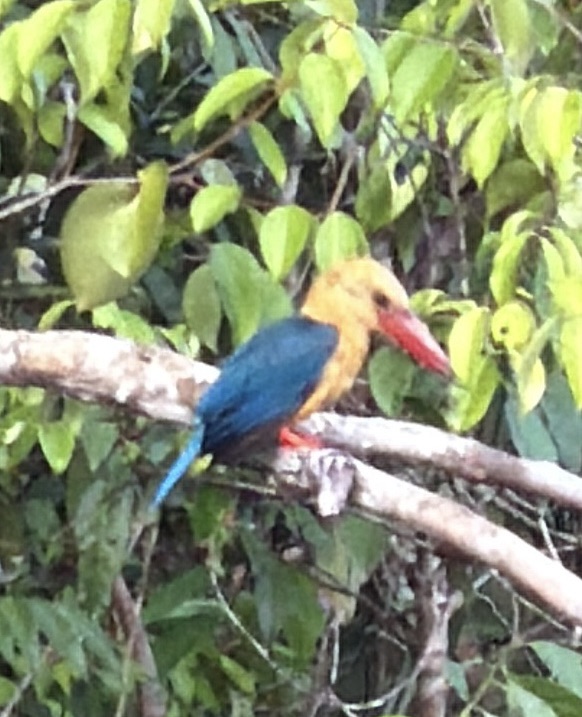
We boarded a small launch and enjoyed a scenic cruise along the jungle fringed Negombo Lagoon at sunset. The marsh’s varied aquatic habitats support a diverse coastal ecosystem. It is home to Eurasian crocodiles, macaque monkeys and water monitors. Many species of butterflies and dragonflies have also been recorded here. Various species of birds, such as kingfishers, and herons call this area home. We were treated to a show by the monkeys – our boat driver put corn kernels on the front of our boat, and before you knew it, we were visited but the friendly creatures – they even climbed onto the roof!

Next we had a surprise – set up in the water between the mangroves were two high tables complete with cocktails containing soda, Arrack (Sri Lankan whiskey) and orange juice – which were delicious, plus plates of sliced pineapple and guava. There were also several lit lanterns which added to the ambience. It was such an amazing experience, standing barefoot in the knee deep water, cocktail in hand, watching the sun set.What a lovely start to our holiday!

After our cruise, we enjoyed a delicious BBQ dinner at a restaurant on the Dutch canal – we had traditional and local dishes, mostly seafood, whilst listening to a couple of entertaining musicians. We tried the traditional “hopper”, a bowl-shaped pancake, which also has a variation with an egg fried in the centre. Priya made the evening very special by explaining the traditions of lighting candles, and also getting the musicians to play both the Australian and Sri Lankan national anthems. 

A fantastic day to start our holiday with! 

Day 3

Thursday 8th January 

Negombo – Dambulla – Habarana

24-28 degrees 

After leaving the hotel we experienced one of Negombo’s fish markets. The market is full of life and colour, as each morning fresh catch is brought in and vendors voice their prices at the top of their lungs. Buyers bargain for the best deals in what is a daily practice for the locals of this coastal town. All types of fish are for sale – tuna, king fish, queen’s fish, Mari Mari, white bait, sword fish, leather jacket and more, also calamari, crabs, oysters, mussels and more.

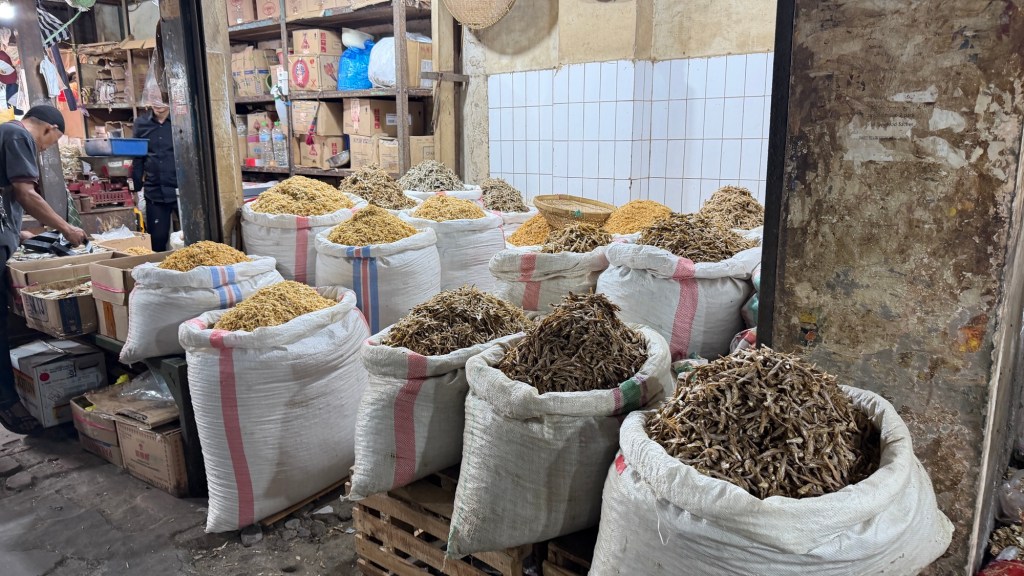
Dried fish is also sold. The fish is heavily salted and spread out on sheets to dry. Women turn the fish every two hours until it is dry. It is packaged for domestic sale, all over Sri Lanka and some for export. Street dogs and cats wander around, but will not touch the fish due to its saltiness. Needless to say, the fishy smell was a little overwhelming!

Negombo Fort was built by the Portugese to defend Colombo in 1672. In 1796 it was occupied by the British, eventually demolished, then a prison built in its place. We walked past and saw family members lined up to take food and clothes to their loved ones. Jails are not like they are in Australia – here they have to sleep on the concrete floor, use a communal toilet shared amongst 100 men, and only given very basic and minimal food. The main reason these people are in jail is because of their attempt to transport people to Australia. If these people are caught, not only do they go to these rudimentary jails, but they lose their homes, their cars, their Tuk Tuks, their jewellery and all their personal possessions. There are government signs everywhere stating explicitly that you will not succeed in fleeing to Australia because of the strict laws against this – punishment will always be detainment.

We had a very pleasant two hour drive through coconut and rubber plantations, rice paddies, pineapple farms, also many banana and mango trees, plus some small crops.

There are 780,000 hectares of rice paddies here and there is a great deal of rich and fertile agricultural land for the growing of a vast variety of fruits and vegetables.

There is a huge coconut growing industry here. It takes 6 years to grow a tree that produces coconuts ready to eat. 1 million people depend on the coconut industry.Because the coconut trees grown here for many years were getting so tall and difficult to retrieve the coconuts, they have now developed a hybrid species, which are much shorter trees.

Sri Lanka dominates the global market for “true” or Ceylon cinnamon, producing nearly 90% of the world’s supply, prized for its unique quality, aroma, and health benefits, cultivated primarily in the island’s southwest coast with sophisticated, traditional harvesting and processing methods involving peeling the inner bark into distinctive quills.

Next, we made our way to the Dambulla Caves, home to the best preserved cave temple complex of Sri Lanka. The cave temples were built in the 1st century and the gigantic granite outcrop towers more than 160 metres above its surrounds. We explored the caves covered by ancient frescoes and their interior,  where over a hundred statues of Buddha (157 to be exact) are housed, some carved from the rock itself. 

Sri Lanka is home to no less than 8 UNESCO World Hertitage-listed sites, 5 of which are situated in what is known as the cultural triangle, in the centre of the island.

We continued onto the small village of Habarana. Habarana is the gateway to Sri Lanka’s cultural triangle and national parks. An extra special treat was to see a wild elephant bull walking along the road. I’m not sure he was so happy posing for us. 

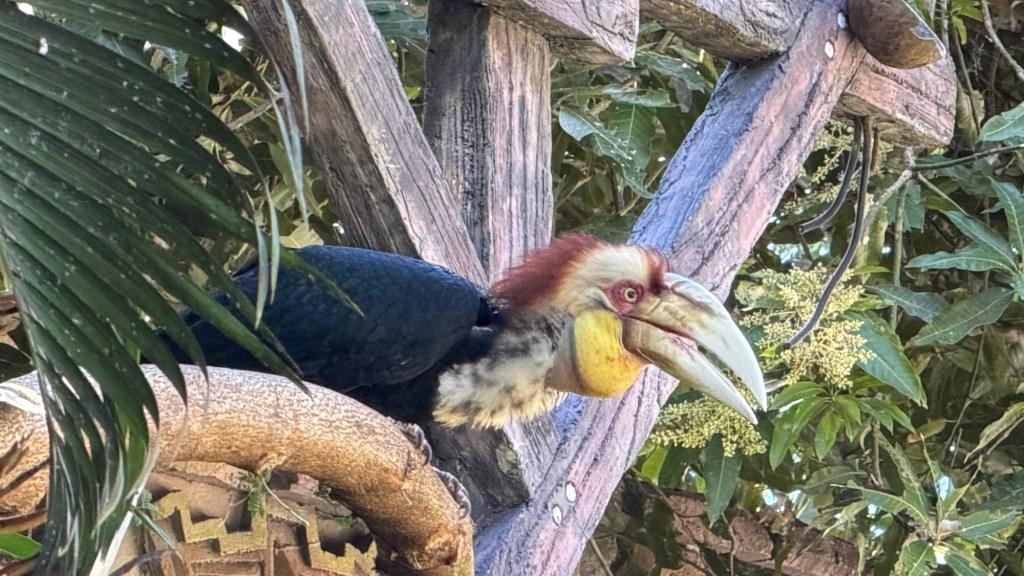
We are staying at Cinnamon Resort for four nights. Featuring views out over Habarana Lake and modelled on a traditional Sri Lankan village with small chalets dotted through the lush landscape. It is a paradise for nature lovers. Frank and I had a walk on the “jogging track” enjoying the serenity. We were treated to approximately 20 Malabar Pied Hornbills settling down to nest in a few of the trees. They looked very similar to toucans . Unfortunately the light was not so good, so my photos don’t do them justice. 

Dinner at the restaurant turned into a global tasting tour — a buffet that seemed determined to represent every cuisine. Just when we thought we couldn’t possibly eat another bite, we discovered the infamous “naughty room” – a dazzling shrine to desserts, where willpower went to die and indulgence was not only encouraged, but inevitable. Four nights of this! 

Day 4

Friday 9th January 

Habarana

22-26 degrees, drizzle, humid

Anuradhapura is one of the ancient capitals of Sri Lanka and the capital of the North Province. Founded in the 5th Century BC, this UNESCO World Heritage listed city is known for its many ruins of temples, ancient pools and dagobas. At the centre of Anuradhapura is the majestic Ruwanwelisaya Dagoba, also known as the Maha Thupa or “Great Stupa”, despite being smaller than the other great stupas. At 55 m  high, this is one of the ancient city’s most prominent landmarks. According to legend, the dagoba was originally built in the shape of a bubble but subsequent restorations have changed its appearance. It still stands on an enormous raised platform, however, supported by a striking wall, formed of a frieze of elephants. Four smaller stupas mark the corners of the platform and elaborate shrines (valkahadas) are attached to its base. The stupa is filled with earth. It is painted every year with white chalk. 

South of the Ruwanwelisaya Dagoba is the Sri Maha Bodhi, or “Sacred Bo Tree”, which has a fair claim to being the most holy tree on Earth. Offering a direct link to the Buddha himself, the tree is said to have been grown from a cutting taken from the bodhi (bo) tree in Bodhgaya, in northern India, beneath which the Buddha himself attained enlightenment some time around 450 BCE. The tree is believed to have been transported to Sri Lanka by Princess Sangamitta, the sister of Mahinda, the monk who brought Buddhism to Sri Lanka. Festooned in prayer flags, and surrounded by an elaborate series of golden-railed platforms, the tree attracts a steady stream of pilgrims. Dressed in traditional white robes, these visitors sit quietly around Sri Maha Bodhi in quiet prayer and meditation. 

A few more stops at other temples, pools and a stop at the ancient moonstone, before our lunch stop. 

After lunch is the Ritigala Medicinal Forest. To get there we had to travel by four wheel drive for 30 minutes. Set deep in the jungle around a large hill formed by huge sculptural granite monoliths, lies the ancient (250-210 BC) and now abandoned hermitage of Ritigala. Today the visible remains are those of a Buddhist monastic congregation that used to practice meditation in total austerity. Rarely visited by tourists, this mystical place is incredibly beautiful and unspoilt with shady forests filled with streams, pools and granite boulders leading to ruins with various meditation platforms. We had drizzly rain but it actually added to the mystical experience. There were remains of a hospital, library, bath house and the meditation walk. It is believed that the structures were used by the monks for meditation purposes and that the area underneath was flooded with water to keep the place cool.

We made it back to the resort just in time for a quick shower and a fresh change, before descending—slightly too enthusiastically—upon the buffet once again, ready to see what culinary temptations awaited us that night. We weren’t let down! 

Day 5

Saturday 10th January 

Habarana 

21-28 degrees

An action packed journey to Polonnaruwa today – on route we saw Malabar Pied Hornbills, Water monitor, Brahminy Kite, Changeable Hawk Eagle, and an Asian elephant splashing about in a waterway. 

Polonnaruwa lies at the cultural triangle’s easternmost point and became Sri Lanka’s second capital in the 11th century after the destruction of Anuradhapura. The ruins of Polonnaruwa are often considered the highlight of the Cultural Triangle and the city was the centrepiece of the Sinhalese kingdom established by King Vijayabahu I. Abandoned in 1293 and quickly consumed by the jungle, Polonnaruwa was excavated in the 20th century and declared a UNESCO World Heritage site in 1982. 

We spent our morning discovering this ancient city that was built alongside a large artificial lake. At the centre of the ancient city is the Royal Palace Group, where King Parakramabahu’s grand palace, also known as Vejayanta Prasada, and other buildings were once protected by heavy fortifications. The palace is believed to have originally stood seven storeys high with a thousand rooms, although all that remains today is a three-storey building made of brick.

To the east of the palace is the Council Chamber, or Audience Hall, where the king would have met with his advisors and various officials. The roof of the chamber is long gone, but the base still remains, decorated with friezes depicting dwarves, lions and elephants. The staircase leading up to the landing has a fine moonstone at its base, ornamented balustrades, and two lions flanking the top step. I love how green and lush the surrounding landscape is. 

The Quadrangle complex is home to a number of fascinating buildings, including the Vatadage – one of the most beautiful sights in Polonnaruwa. A relic house built by Parakramabahu, the Vatadage comprises a central dagoba set on a raised terrace, surrounded by a brick wall. Located opposite the Vatadage, the Hatadage is a Tooth Relic temple built by Nissankamalla, which was originally a two-storey building.

Gal Vihara (the “Rock Monastery”) houses four large Buddha statues painstakingly carved from a single granite outcrop. Dating from the 12th century, the carvings were originally housed within brick shrines but now stand in the open air, protected from the elements only by a rather ugly corrugated iron canopy. Pride of place goes to the 14 metre long reclining Buddha.

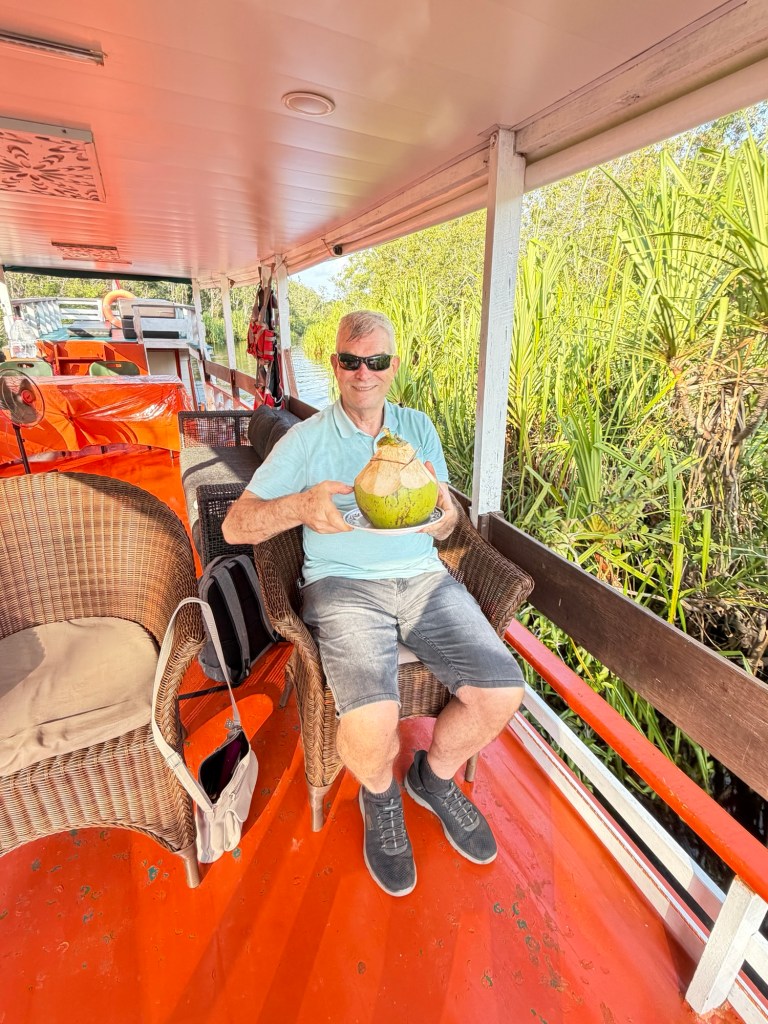
During the morning we were treated to a King Coconut water to quench our thirst – very refreshing. 

Once we had finished our visits to the archaeological sites in Polonnaruwa, we had a delicious traditional lunch at a local family home. A demonstration on how to cook pumpkin curry preceded our lunch – a choice of 27 dishes, each one bursting with regional spices and flavours. Accompanied by a mango lassi, we almost rolled out! Our meals were served on bamboo plates lined with banana leaves

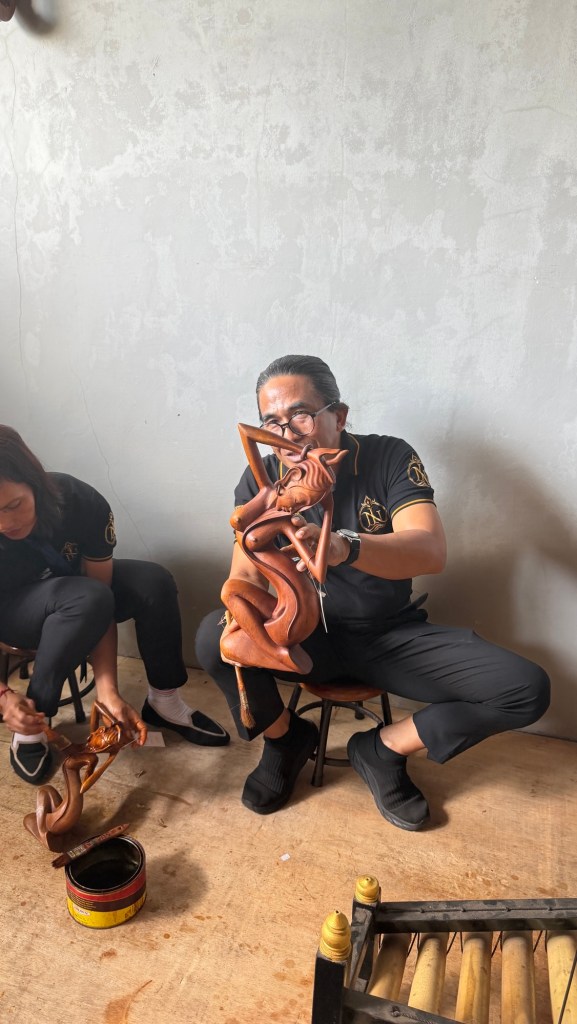
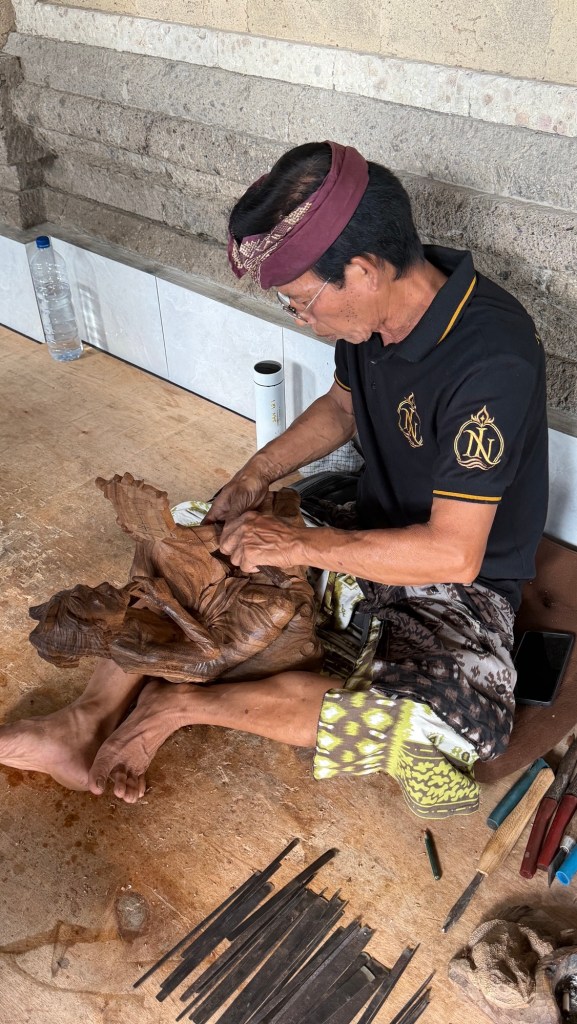
A short stop at a woodcarving factory – we saw a similar wood carved elephant made from ebony that Frank’s grandfather brought back from Sri Lanka almost 100 years ago. The one for sale was $25,000!

Our destination in the afternoon was Hurulu Eco National Park, where vast expanses of evergreen forest and scrub areas serve as the roaming grounds for elephants. Here, we enjoyed a game drive by jeep – saw so many elephants, and almost… a leopard! As we drove in there was a leopard, but of course there were a few jeeps trying to jockey into position, and the leopard disappeared by the time we got close. Dam it!  We did see water buffalo, black headed ibis, peacocks, and other birds. 

Back to our resort by 6pm, time for a shower, before a very light dinner. Fabulous day all round. 

Day 6

Sunday 11th January 

Habarana

21-29 degrees 

Today was a visit to the UNESCO World Heritage Site of the famous rock fortress of Sigiriya. The remains of a 5th Century fortress lie perched high atop a rock plateau, offering panoramic views over a vast plain and dense jungles. Built by King Kasyapa, an impressive 5 acre fort sat astride the rock and a city nestled at its base, but now the city is gone and the fortress is in ruins. The ruins were first discovered by British archaeologists in the early 20th century, and excavations have continued here ever since.

We walked through a 5 acre ancient fort and its beautiful gardens which are kept in pristine condition by 300 workers. It’s hard to imagine that only 35% of this wonder has to date been excavated and that people in the future will be able to see even more findings as more of this area is excavated.

After walking through the beautiful grounds of the water garden, we ascended 1200 perilously perched stairs to discover a breathtaking view over the Sri Lankan jungle below and intriguing remnants of a once thriving kingdom. There were two pools at the top. All water was recycled. Absolutely fascinating. It’s quite unbelievable how this 5th Century rock fortress was built on the top of the Lion Rock which is 363 metres high.

Braving the additional spiral staircase, we saw the 21 frescoes of female nature spirits, known as Apsaras, painted beneath an overhang about 90 metres up the rock. These frescoes are beautiful – still boasting vibrant colours even after 1,500 years. Just above them, a wall adorned with 1,000 year old graffiti and poetry serves as a testament to visitors who recorded their impressions of the painted women. 

It was a two and a half hour return trip to complete the climb – we came back very hot and sweaty, but it was totally worth it. Our iced towels were very welcome as we got back into the coach. 

Ten minutes away was a very quaint village. Here we visited the local school of only twelve students, who sang for us, and also wrote our names in Sinhalese on the whiteboard. Bunnick has supported this school for many years.

Priya took us for a walk around the village- we walked through farms giving us a good understanding of their traditional farming methods, saw the process of millet being made into flour, watched rice being de husked, the making of coconut roti, also how to sharpen knives using sand and teak. We then enjoyed a traditional lunch cooked by the local families – again served from clay pots onto banana leaf lined clay plates.It was a lovely experience, and great to know that the families benefit from us visiting them. 

Last, but not least, on today’s agenda was a visit to the local Sri Lankan massage wellness centre for a traditional herbal massage. There was a herbal doctor there and if you have any ailments, she could assist you and prescribe herbal treatments.I had the Shirodhara treatment, an ancient Ayurvedic therapy. Warm herbal oil pours in a continuous stream over the forehead where nerves are highly concentrated. The pressure of the oil on to the forehead creates a vibration. Combined with a full body massage and sauna, the whole experience was very much appreciated after the big day we had had. 

Then our  final buffet at this resort, before settling down for a very welcome sleep!

Day 7

Monday 12th January 

Habarana – Matale – Kandy

20-27 degrees

This morning we farewell Sigiriya with our sights set on Kandy! A few stops on the way – the first one being a visit to a local market. This bustling market had every type of fruit and vegetable conceivable. The only imported fruit here are oranges. 

Next stop was Coconut House – here we see how a local family utilises every element of a coconut tree, from extracting coconut oil to creating rope. Coconut milk, coconut oil, treacle, toddy (Arrack) sambol come from the inside of the coconut, whilst the fibre makes rope, mats, and brooms. The coconut shells make garden edges, cups, bowls, spoons – nothing is wasted. No wonder they call it the tree of life. 

At Matale, we visit one of the best spice plantations on the island. A large variety of spices such as cinnamon, pepper, nutmeg and precious cardamom (a relative of ginger) are grown here. We had a very interesting presentation on how some of these spices are grown and processed, followed by a hair removal demonstration (on Frank’s leg), a mini facial, plus a leg massage using the cardamon and red oil, followed by the application of sandalwood cream. My legs felt so rejuvenated afterwards. 


After having lunch at the spice farm, we drove to Kandy. Kandy is a truly charming town that is set around an artificial lake and nestled amidst rolling hills covered by forests and tea plantations. Known for housing the most important Buddhist temple in the country, the former capital of Ceylon and the last seat of the Sinhalese Kingdom is Sri Lanka’s cultural capital. Kandy’s beautiful city has a distinctive style due to the impressive colonial architecture that still survives today! 

On arrival, we visited the Temple of the Sacred Tooth Relic which houses one of the most sacred relics of Buddhism —a tooth of Buddha collected from his funeral pyre, which is now protected within the gold -roofed Temple of the Tooth. 

Built in the 16th century, the original temple stood at the heart of the Royal Palace complex. The main shrine was originally constructed during the reign of Vimala Dharma Suriya I (r 1590–1604), but it was rebuilt by King Rajasinghe II (r 1634–86). The Dutch incursion followed in 1765, when the palace and its temple were plundered for treasures. The palace was renovated in the 19th century by Sri Wickrama Rajasinghe, the last king of Kandy, who built the moat and replaced the earlier entrances with a massive stone gateway. Notable later additions include the magnificent golden roof over the main shrine in the 1980s. An LTTE bombing badly damaged it in 1998, but the temple has since been restored and remains a sacred place today.

To finish off the day, we were treated to a mesmerising cultural show and traditional dance performance. We witnessed the fascinating Kandyan dance, a vibrant art form unique to Sri Lanka that involves elements of fire dancing, drumming and acrobatics. The performance has deep cultural ties, traditionally being performed only during royal ceremonies, festivals and religious events. 

We had a late check in at the Cinnamon Citadel – framed nicely against the Knuckles Mountain Range and the Mahaweli River. Luckily it had escaped any damage from the recent floods.

Day 8

Tuesday 13th January 

Kandy

20-28 degrees 

Today we started at the Amith gem factory with a short presentation re the difference between precious (hardness rating greater than 8) and semi precious stones. The Sri Lankan sapphires are precious, and have a hardness rating of 9. The pink sapphire is becoming very valuable because it is rare. Not only is Sri Lanka the most productive source of sapphires to the world, but they also boast some of the oldest mines in the world, reaching as far as the Second Century AD and international trade of Ceylon Sapphires have been recorded as far as the 4th and 5th century AD.We had some  time to shop – of course I succumbed to a stunning pink sapphire. It is just gorgeous. 

The beautiful Royal Botanical Gardens of Peradeniya was our next destination. Initially a Royal Park, it became a Botanical Garden in 1821 under British rule. Here exotic crops such as coffee, tea, nutmeg, rubber and cinchona (quinine) —all of which are important to the country’s economy —were first tested. The Botanical Gardens include a beautiful orchid house and a wide variety of plant species from all over the world. A grassy central area of the gardens nearly 1.6 ha in extent is surrounded by the Memorial collection. This diverse array of trees has been planted by Royalty, Heads of states and other dignitaries visiting the Royal Botanic Gardens. This includes more than 100 magnificent trees that re – live the world history taking us a journy through recent past.

Because there are 60 hectares of gardens, Priya organised a cart for us to get around in. Luckily he did as it was very hot outside today. The gardens are truly lovely and great to have a sample of every tree in Sri Lanka. We enjoyed lunch in the cafe looking over the grounds.

From there we went to a textile store and had all the various aspects of silk and other fabrics explained. I tried on a sari – 6.5 metres of fabric. Just gorgeous. I really have enough silk scarves and resisted the temptation to buy more. 

An early finish to the day – a good opportunity to relax for a couple of hours and enjoy the tranquility of the hotel’s gardens. Another scrumptious buffet for dinner. 

Day 9

Wednesday 14th January 

Kandy – Nuwara Eliya

12-19 degrees, sunny

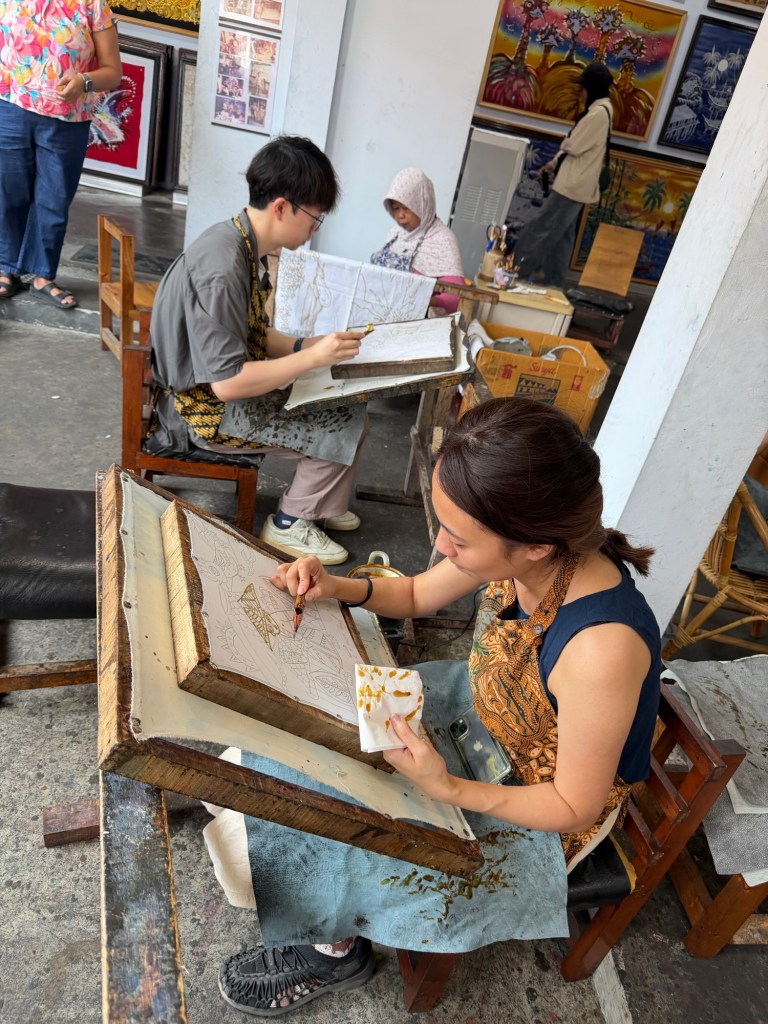
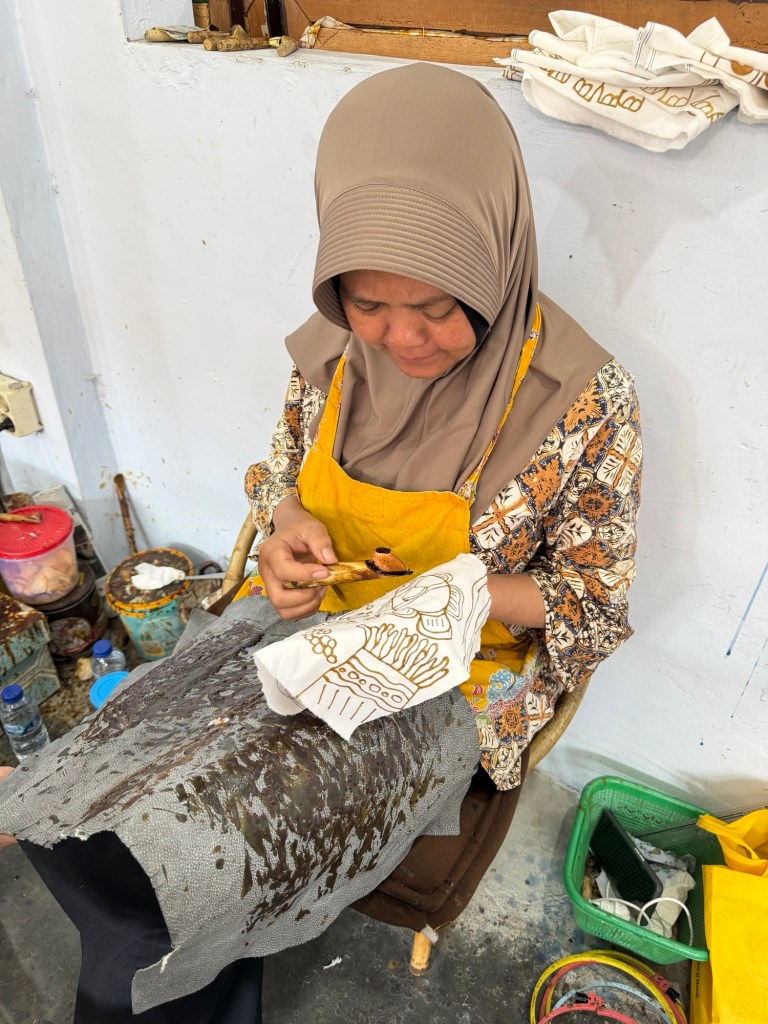
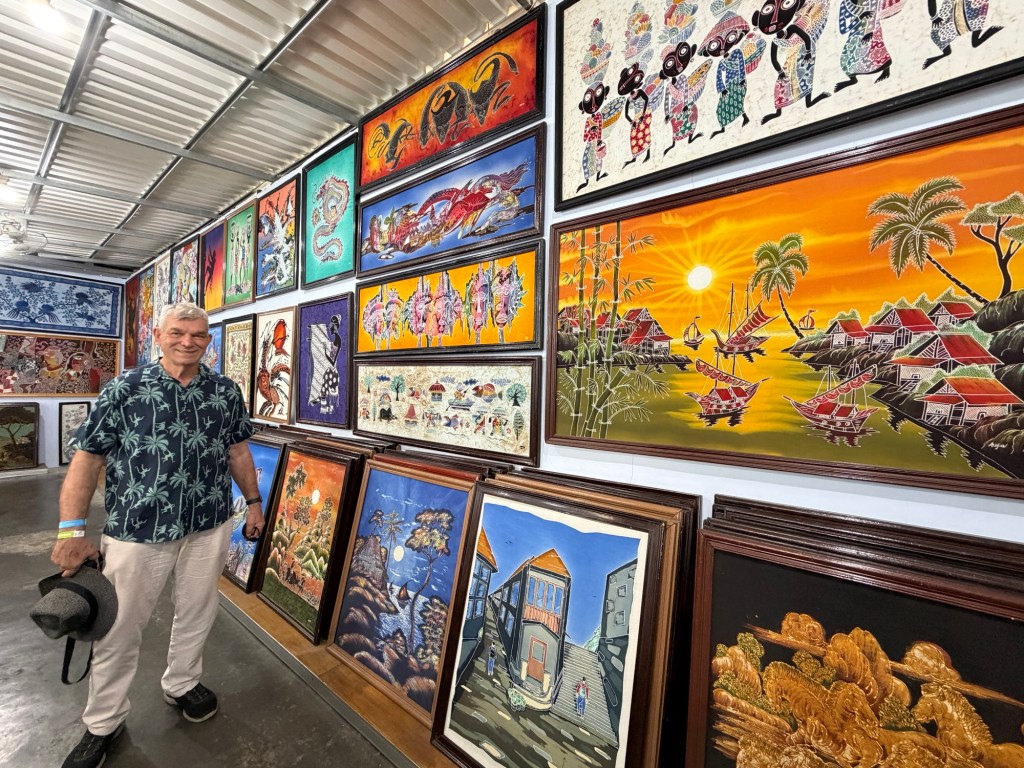
Today we visited a batik factory in Kandy where we learnt about the wax-resistant dying tradition using fabrics. It is a very labour intensive process but with striking results at the end. Each day a different layer of wax is used to make the different coloured patterns. All types of batik and tie-died clothes were available for sale, as well as tablecloths, table runners, cushion covers, wall art and more.

We then made it through Kandy’s peak hour traffic and had a lovely scenic drive to the country’s main hill resort, Nuwara Eliya. There was much residual devastation from the recent floods – lots of rubbish in the trees along the river’s edge. People were illegally collecting sand from the river bed. The landslides caused by the recent floods were visible everywhere along the side of the mountains.

We visited Glenlock tea plantation and factory where we discovered how Sri Lankan tea is produced, from picking the leaves to selling the tea. Sri Lankan tea processing, primarily for black tea, involves meticulous hand-plucking of “two leaves and a bud,” followed by Withering (reducing the moisture), Rolling (rupturing cells for flavour), Fermentation (oxidation for colour/strength), Drying (fixing flavour), and finally Grading/ Sorting by size and quality; all crucial steps to create Ceylon Tea’s distinctive character. 80% of the tea is then exported overseas and the remainder is sold locally in Sri Lanka. Of course we couldn’t leave without sampling some tea! 

Navigating the hairpin turns, we continued further up into the mountains passing many more tea plantations on terraced hillsides. The scenery was so green and lush. Beautiful flowers along the roadside – cannas, lillies and trumpet flowers in abundance. Our lunch stop was at a restaurant which had the most spectacular view overlooking the plantations. 

On the way up, a boy holding a bunch of flowers was waving at us, trying to get us to buy the flowers . When we didn’t stop, he raced straight up the mountain side while we manoeuvred the hairpin turn. He was waiting for us as we passed by. This continued to happen for several more turns. Eventually we stopped and Priya bought the flowers. The boy well

We then continued on to a town in the heart of Sri Lanka’s tea growing area. At 2000 metres above sea level Nuwara Eliya, or the “city of life”, was founded by the British explorer Samuel Baker in 1846. It was a sanctuary to the colonialists who were keen to escape the humidity and heat of Sri Lanka. This bustling town is dotted with colonial-era buildings and parks, and still provides a glimpse of life during the colonial heyday. We had free time to have a wander around the town and explore the busy Central Market and Bazaar. The pink colonial era post office has an eye-catching clock tower. The region’s temperate climate makes this the coolest area in the country.

Not far away was the Galway Heights Hotel, where we are staying for two nights. Frank and I walked to the local Tamil village where all the tea workers live. There was a Hindu temple there which was very colourfully decorated inside. Another buffet, and a couple of musicians playing some lovely background music. They also played the song we had been practicing so we were able to confidently join in.